Everything you need to know about bike tyres at a glance.
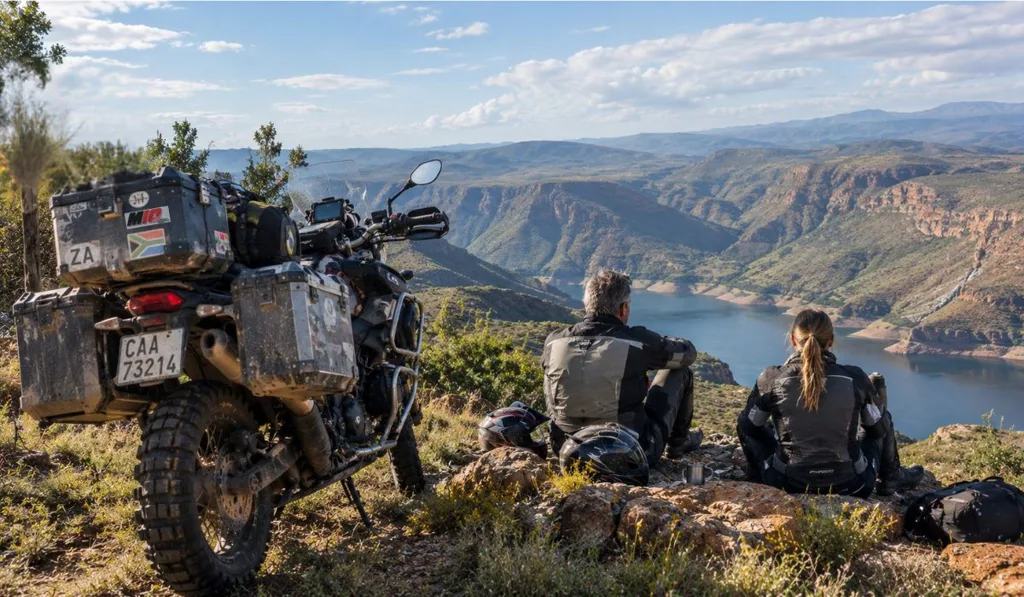
Motorcycle Tyres Explained: Speed Ratings, Load Ratings & Sizes
It’s a long read, but it will make your life on your bike so much better.
Stop asking “what’s the best tyre?” That’s the wrong question. It’s about the correct tyre for your bike, your load and how you actually ride. Heat kills tyres. Load and speed ratings aren’t suggestions. Here’s the no-BS guide that could save your skin (and your claim).
Every time I see someone trashing a tyre brand online, or asking "what's the best tyre?", I get properly wound up. Not because they're stupid, but because they're asking the wrong question. It's not "what's the best tyre?" It's "what's the correct tyre for my bike, my load and the way I ride?"
I've handled enough tyre claims to know how most of these stories end: wrong tyre, wrong pressure, or a half-truth at the sales counter. So here are the facts. No fluff, no brand wars. Read it, make an informed choice, and own the result.
Key Takeaways
-
Heat is what kills tyres: Wrong pressure, wrong load, wrong tyre for the job: they all just make heat.
-
Your sidewall tells you everything: size, construction, load rating and speed rating.
-
Speed and load ratings are tested limits: not suggestions. Don't downgrade them.
-
Match the tyre to your bike's homologation: especially if you ride two-up and loaded.
-
Tell the retailer the truth: about your bike, your weight and your riding. It's the cheapest tyre insurance there is.
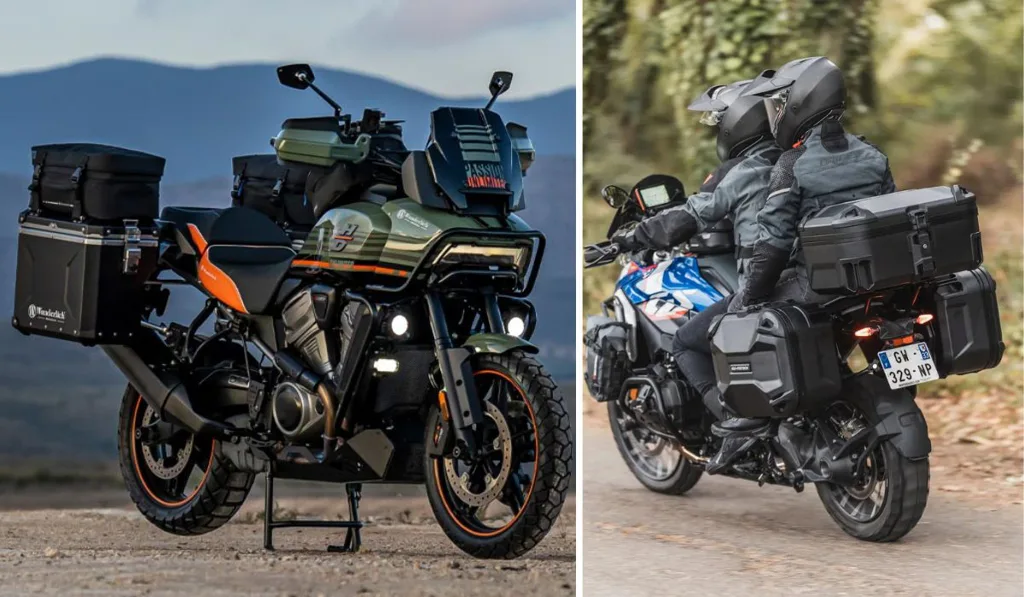 Fully kitted out adventure bikes.
How Much Weight Do Your Motorcycle Tyres Carry?
Picture the typical adventure ride. Big adventure bike, both crash bars, panniers, top box, spotlights, bash plate, GPS, the lot. Then you and your pillion in full gear, a tent, sleeping bags, a stove, enough food for a rugby team, and sommer a kiff set of knobblies because they look lekker.
Now add up the numbers. Your whole rig sits on two contact patches, each about the size of your palm. Here's a rough, illustrative tally of the actual weight said palm sized bits of rubber are expected to carry:
|
Item
|
Approx. weight
|
|
Bike, road-ready and fully fuelled (BMW R 1300 GS 237 kg/269 kg for the ADV, KTM 1390 Super Adventure 244 kg)
|
250 kg
|
|
Accessories: luggage, crash bars, bash plates, lights, screen, tools
|
60 kg
|
|
Rider in full gear
|
100 kg
|
|
Pillion in basic gear
|
75 kg
|
|
Camping kit and provisions
|
25 kg
|
|
Extra water, fuel and food
|
10 kg
|
|
Total
|
about 520 kg
|
Compare that with the manufacturers' own limits: BMW lists a permitted total weight of 465 kg for the standard GS and 485kg for the ADV spec for the R 1300 GS, and the KTM 1390 Super Adventure S is listed at 475 kg. So a fully loaded two up rig can easily blow past what the bike, and its tyres, were designed for.
Your numbers will differ, but it's worth doing the sum with your own bike and your own luggage. Honestly! For your own peace of mind. We see this a lot with Bakkies too, especially those properly kitted out Overland Type Toyota Land Cruisers, that regularly exceed 3,500kg’s GVM, but still get fitted with inadequate suspension, brakes and tyres. Roll across a weigh bridge in that and the cop’s are going to have a field day with your GVM as well as your Drivers Licence.
How Motorcycle Tyres Work and Why Heat Is the Enemy
A pneumatic tyre's job is to soak up bumps and rough surfaces. It does that by deforming at the contact patch, squashing and springing back with every rotation. Without that, your kidneys, spine and teeth would take the beating.
But all that flexing makes heat. Bend a piece of plastic back and forth along the same crease and watch it warm up, wear and eventually tear. Now imagine that happening hundreds of thousands of times a minute inside your tyre.
Barring physical damage, heat is the main cause of tyre failure. And the common culprits are all things you control:
-
Wrong tyre pressure
-
Wrong compound or construction for your speed and weight
-
Wrong tread pattern or tyre size
-
Overloading and point loading (fitting a too wide tyre onto a too narrow rim because it looks cool or you think you will have better traction, it doesn’t and you won’t).
-
Poor suspension setup
How Speed and Load Make It Worse
Load: More weight squashes the tyre harder at the contact patch, so it flexes more and heats up more. Run a heavy load at too little pressure and it gets much worse.
Speed: The faster you go, the more flex cycles per minute and the less time the tyre has to cool between them.
Put a heavy bike at high speed and you're at the worst case, which is exactly what speed and load ratings are built to cover.
 Sponsored
GET 10% OFF! All Insta360 products
STOP scrolling. Your rides deserve better than shaky footage.
Get 10% OFF all Insta360 cameras & accessories from FotoFirst Online using code MOTORIQ. Capture every ride. Relive every moment. Limited offer valid until 31 Dec 2026
SHOP NOW!
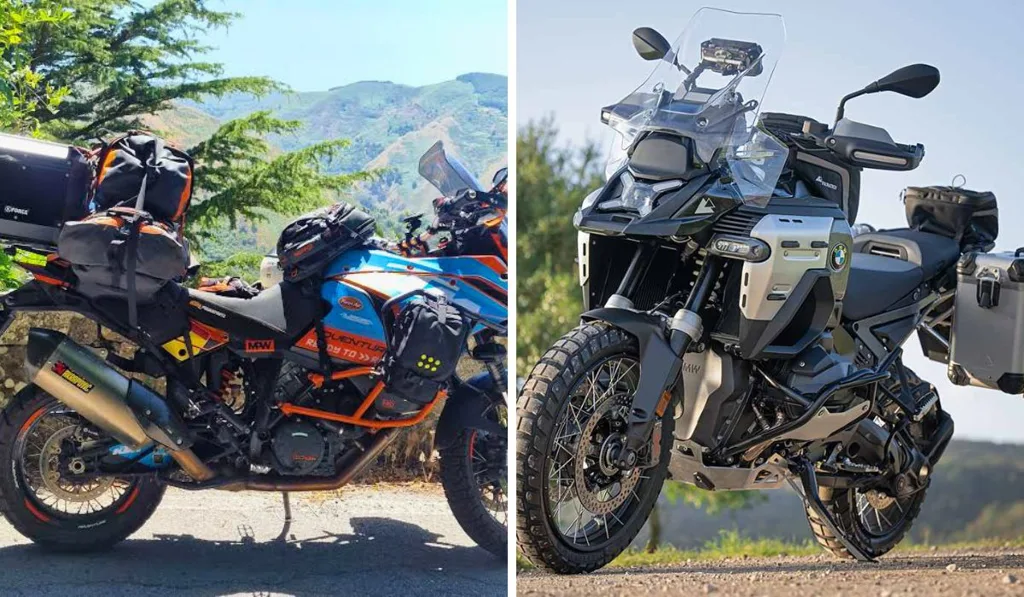 How much does your adventure bike weigh?
How to Read a Motorcycle Tyre Sidewall
That string of numbers and letters on your sidewall isn't random. Take 180/55 ZR 17 M/C (73W):
|
Marking
|
Meaning
|
|
180
|
Width in millimetres
|
|
55
|
Aspect ratio: sidewall height as a percentage of width (in this case 55% of 180mm in height, thus 180mm wide X 99mm high)
|
|
ZR
|
Radial construction, built for high speeds
|
|
17
|
Rim diameter in inches
|
|
M/C
|
Made for motorcycles
|
|
73
|
Load rating: up to 365 kg per tyre
|
|
(W)
|
Speed rating: above 270 km/h
|
Radial, Bias or Bias-Belted?
Construction shows up in the size marking too, and it matters:
|
Type
|
How to spot it
|
Best suited to
|
|
Radial
|
R, e.g. 120/70 R 15
|
Powerful, sporty bikes with rigid chassis
|
|
Bias
|
A dash, e.g. 120/70 - 12
|
Small to medium bikes at moderate speeds
|
|
Bias-belted
|
B, e.g. 180/65 B 16
|
Heavy motorcycles
|
Motorcycle Tyre Load Rating and Speed Rating Explained
The two characters at the end of the size, like 73W, are the load index (73) and the speed rating (W). Together they're called the service description.
Load Rating (Load Index)
The number is the maximum weight one tyre is approved to carry. It covers the bike, rider, pillion and luggage, which is why the rear tyre usually has a higher rating than the front.
|
Load index
|
Max load per tyre
|
|
56
|
224 kg
|
|
58
|
236 kg
|
|
62
|
265 kg
|
|
73
|
365 kg
|
That is why I recommend you should go weigh your own rig, fully loaded with all your kit, food, camping equipment and both rider and pillion. Then choose tyres with a combined Load Index totalling at least 10% more than your total rolling mass… for your own safety and enjoyment.
Speed Rating
The letter is the top speed the tyre has been tested and approved for. A rating in brackets means "above": a plain W is good for 270 km/h, while (W) means above 270 km/h.
|
Speed rating
|
Top speed
|
|
P
|
150 km/h
|
|
Q
|
160 km/h
|
|
R
|
170 km/h
|
|
S
|
180 km/h
|
|
T
|
190 km/h
|
|
U
|
200 km/h
|
|
H
|
210 km/h
|
|
V
|
240 km/h
|
|
W
|
270 km/h
|
|
(W)
|
Above 270 km/h
|
These are standard ETRTO values for the common ratings. Always check the exact service description on your own tyre, because speed and load ratings are related but not interchangeable.
Who Sets the Ratings, and Can You Ignore Them?
The ETRTO (European Tyre and Rim Technical Organisation) sets the standards tyre makers must follow. Bike manufacturers then homologate specific tyre sizes for each model, with a maximum speed and load attached. Tyre makers test to prove they comply, running the tyre at maximum load, minimum pressure and top speed. Only if it passes does it earn its rating.
Can you ignore them?
Don't!
Fitting tyres the manufacturer didn't approve of is a safety risk, and it can jeopardise your insurance if you have an accident. How strictly it's enforced depends on where you live (it's tightest in Europe), but it's the right call everywhere. In our experience, local Insurance companies look for ways to repudiate your claim and weasel out of paying out…. Just look at all the incentives you are offered not to claim, so err on the side of caution, not just for your safety, but heaven forbid something does happen, your insurer has less excuses not to pay.
The "I never ride that fast" argument doesn't help either. A lower speed rating can come with a lower load rating than your bike needs, so check the full service description, not just the letter. I recommend a speed rating about 10% higher than the actual top speed of your bike, because we’re all human, with a little bit of hooligan in us. And when that sun starts hanging low over the horizon and you’re still a good few clicks out from your overnight digs and if the road allows it, you’re going to give it horns to try and get there before you have to try to find it in the dark.
You'll find the approved sizes and ratings on your tyre sidewall, in your owner's manual, and sometimes on the pressure sticker.
What Does REINF Mean?
Some bikes have two approved versions of the same size: a standard tyre and a reinforced one built to carry more.
|
Tyre
|
Load rating
|
Speed rating
|
Type
|
|
130/70-12 56P
|
56
|
P
|
Standard
|
|
130/70-12 62P REINF
|
62
|
P
|
Reinforced
|
Which one is right depends on your bike model and what the manufacturer approved. Not sure? Ask a professional.
 Sponsored
Advertise with Motor IQ today!
The ultimate touring machines deserve an ultimate audience. Connect directly with the buyers planning their next trans-Karoo trek.
Learn More.
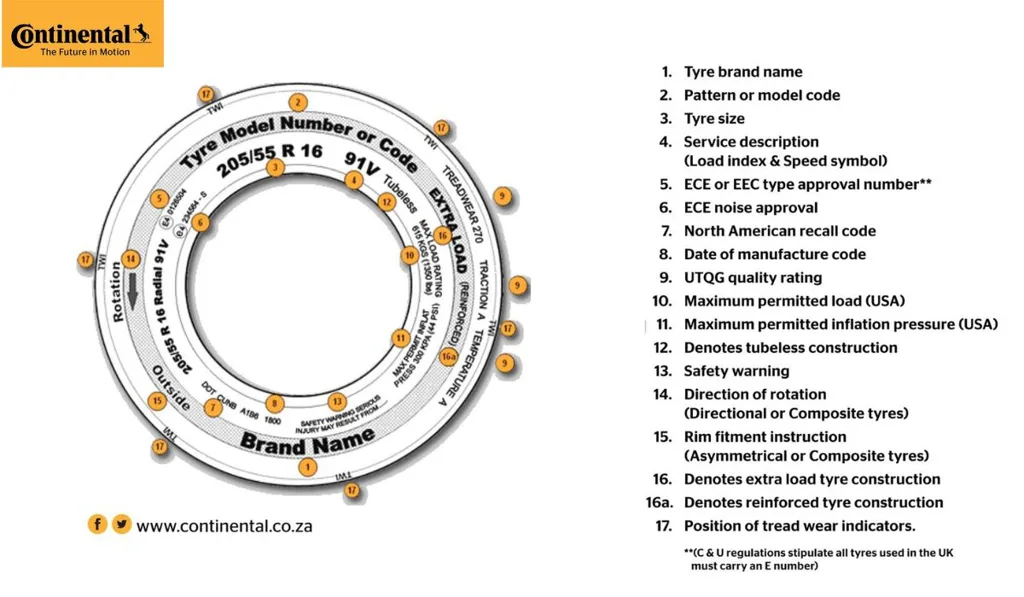 Motorcycle Tyre Sidewall marking explained.
Tyre Warranty Claims: How Manufacturers Know What Caused the Damage
John Boyd Dunlop developed the practical pneumatic tyre in the late 1880s for his son's tricycle. Since then, manufacturers have collected well over a century and a half's worth of data on every kind of tyre: bicycle, motorcycle, car, truck, aircraft, and those monster tyres on open-cast mining trucks. They've seen every type of failure, found a fix for most of them, and they're still learning every day.
All tyre manufacturers furnish their distributors world wide with a catalogue of pictures of failures, what they look like and why and how they failed. Every possible scenario you can imagine is in that catalogue since 1880.
So when some Smartie Pants arrives with a cock’n bull story about why his tyre failed, I can promise you they’re just the latest teller of a very old fairytale. I have personally repudiated more claims than I have approved that I have been presented with. If the client accepted my ruling graciously, I would always try to help out with pricing or etc just to be lekker. If they tried to get threatening, I would leave them to learn the hard way.
How Tyre Companies Train Their People
Manufacturers train their distributors worldwide, in depth, on why tyres fail and what to do about it. Distributors train retailers, and retailers usually train their staff.
It isn't perfect. Staff move on, training slips, and salespeople on commission sometimes give in to a customer who pushes hard for the cheapest price or the coolest look. Who's to blame then? The customer who insisted on looks or price over practicality, not the retailer, and definitely not the tyre brand.
 Sponsored
Advertise with Motor IQ today!
When it’s time to move your sports or superbike, don’t deal with standard marketplace time wasters. List it where high revs and pure performance are actually respected.
Learn More.
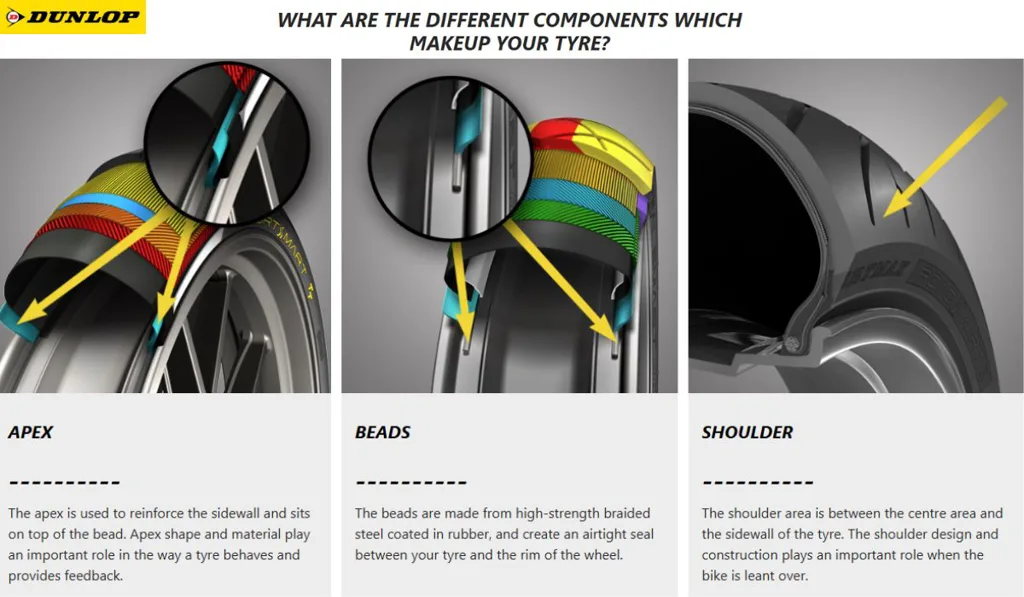 Motorcycle Tyres Components Pt.1
Motorcycle Tyre Sizes for Road, Off-Road, Track and Retro Bikes
Road: Stick to the sizes your manufacturer recommends. They're printed on your original tyres.
Off-road only: The road use rules don't apply, so you can pick sizes to suit your riding. Just note that enduro and motocross widths are measured differently (motocross at the base of the knobs, enduro at the top), so use this table to match them:
|
Enduro
|
Motocross
|
|
90/90-21
|
80/100-21
|
|
120/80-19
|
100/90-19
|
|
130/70-19
|
110/90-19
|
|
120/90-18
|
100/100-18
|
|
130/80-18
|
110/100-18
|
|
140/80-18
|
120/90-18
|
Track: Some riders fit a wider rear for extra grip, at the cost of handling. Competition tyres usually carry NHS (Not for Highway Service), which means they're not road legal.
Retro and Classic Bike Tyre Sizes
Older bikes used inch sizes, while modern tyres use millimetres (rim diameter stayed in inches). Here's how they convert:
|
Metric (mm)
|
Old inch size
|
|
50/100
|
2.00
|
|
60/100
|
2.25
|
|
70/100
|
2.50
|
|
80/80
|
2.75
|
|
80/90
|
2.75 - 3.00
|
|
90/90
|
3.00 - 3.25 - 3.60
|
|
100/90
|
3.50 - 4.10
|
|
110/90
|
4.00 - 4.10 - 4.60
|
|
120/80
|
4.25 - 4.50 - 4.60
|
|
120/90
|
4.25 - 4.50
|
|
130/80
|
4.50 - 4.60 - 5.10
|
|
130/90
|
4.50 - 4.60 - 5.10
|
|
140/80
|
4.50 - 5.10 - 5.50
|
|
140/90
|
5.10 - 5.50
|
Certain Harley-Davidson and American custom bikes still use alphanumeric sizes:
|
Alphanumeric
|
Metric
|
|
MH90
|
80/90
|
|
MJ90
|
90/90
|
|
MM90
|
100/90
|
|
MN90
|
110/90
|
|
MP85
|
110/90
|
|
MR90
|
120/90
|
|
MT90
|
130/90
|
|
MU85 / MU90
|
140/90
|
|
MV85
|
150/80 or 150/90
|
The Bottom Line: Choosing the Right Motorcycle Tyre
Before you buy a tyre, or post a rant about one, ask yourself three things:
-
What's the correct tyre for my application: road, off-road, or a mix?
-
Does it match my bike's size, load rating and speed rating?
-
Did I tell the retailer the truth about my bike, my weight and how I really ride or load my bike?
Get those right and your tyres will do exactly what they were built to do. Get them wrong and that's on the decision, not the tyre. Still unsure? Ask a professional. That's what they're there for.
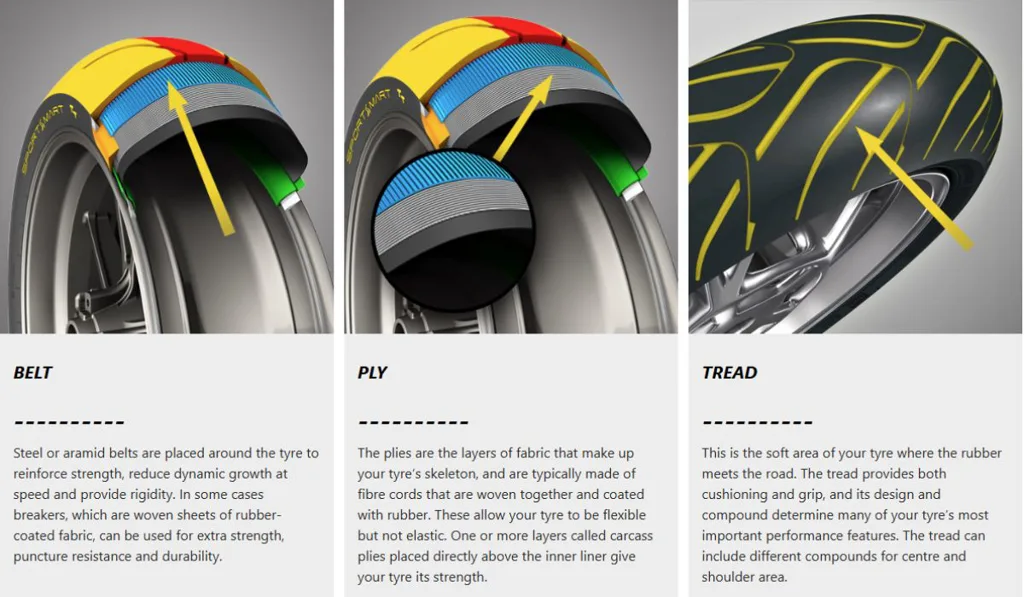 Motorcycle tyre belt, ply and tread expalined Pt. 2
 Sponsored
VLA Racing - WE BUY BIKES
Stop settling for lowball offers. At VLA Racing, we buy your bike for true Fair Market Value. No games, just honest deals and fast pay outs. Ready to sell? Trust the pros who value your ride as much as you do. Get your professional quote today.
SHOP NOW!
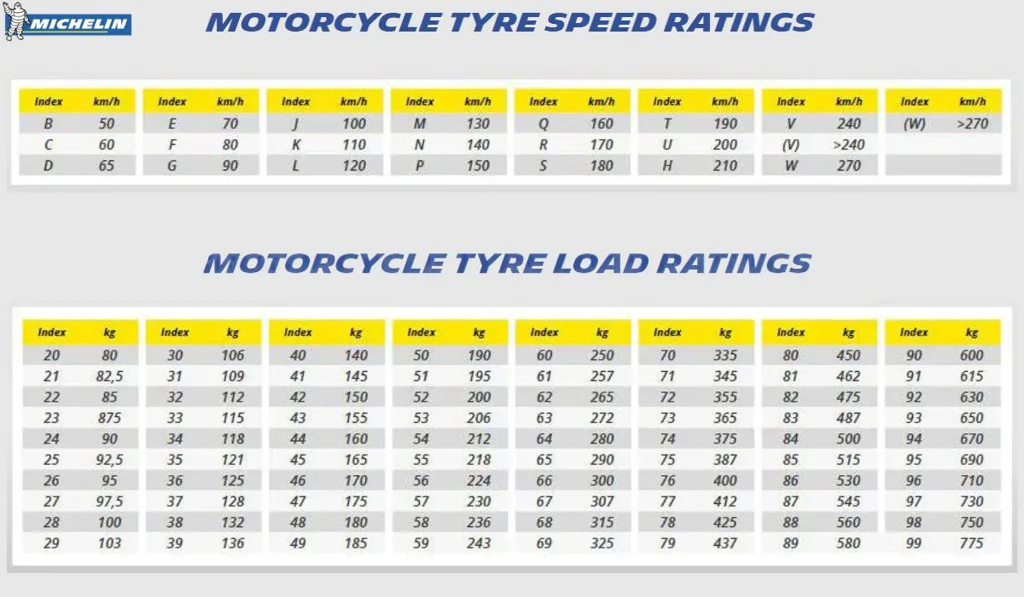 Motorcycle tyre Speed and Load indexes at a glance.
Some closing advice/FAQ’s:
Only when negotiating thick mud or sand, otherwise NO! Riding with low tyre pressures might give you a bit extra grip, but it opens you up to impact punctures and rim damage. If you have deflated for thick mud or sand, re-inflate your tyre to the correct pressures immediately after you have cleared the obstacle.
NO, unless you know you are going to be doing some really extreme riding. Most tyres 80/20 or 70/30 applications work very well in most off road conditions and the occasional mud or sand you might encounter once in a blue moon, is not worth the reduced tyre life, extra road noise and sketchy handling, especially in the wet and reduced speed ratings for your mostly tarmac riding. I personally run a set of Pirelli Scorpion Trails on my old GS, and I promise you most average riders will have a hard time matching my speed in the dirt, over sand, or climbing mountain goat trails. This also gives me the ability to hop onto any bike with any tyre and enjoy the ride and review a bike properly. I have the Trails on my bike, because that is the best compromise for me.
YES! YES! YES! For road, track, adventure, mx…. all of it! - I will address that in my next article.
I wish, but No, No and No - find the best compromise that works the best for you. Don’t succumb to peer pressure. Your riding mates have different skills and riding styles to you, that’s lekker, the world will be terribly boring if we all looked the same, did the same, rode the same - variety is the spice of life - go stand out from the crowd - be different, because that is how people remember you.
For the rider - most certainly. I would rather sweat than bleed or suffer broken bones. Always buy the best you can afford.
For the bike - It is all lekker to have for bragging rights, but most of it you will never use, or seldom use. Go Ride, figure out what would make your ride just that little bit nicer, and then go buy that, and keep doing it until you have a setup that workd for you. I have lugged lots of heavy equipment around over many hundreds of thousands of kilometres unnecessarily in the heat, over obstacles until I eventually wised up.
Just get out there and ride your bike, enjoy this beautiful country and the spectacular riding it offers, and just be lekker!
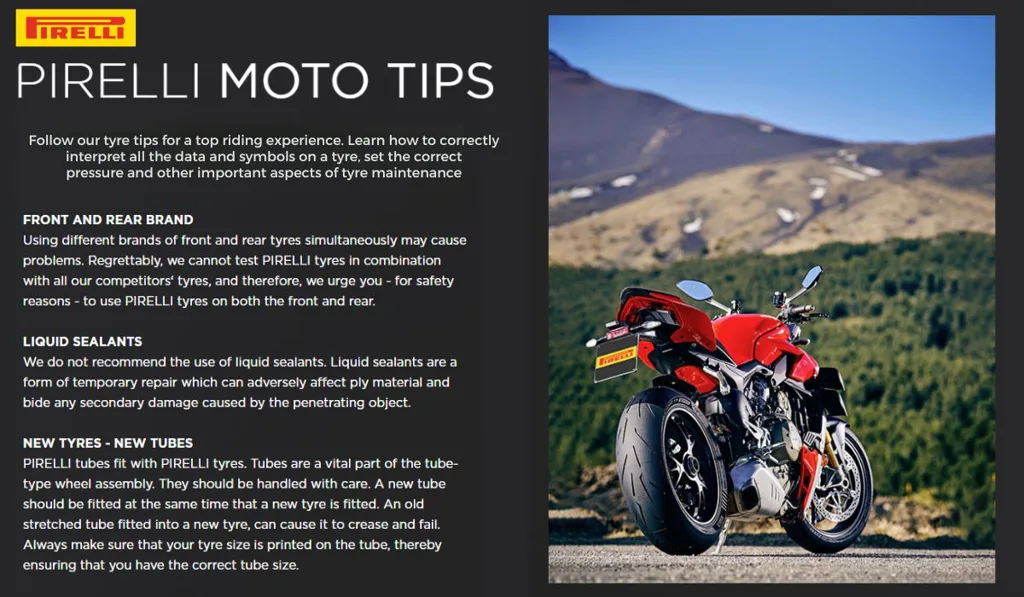 8. Motorcycle Tyres Explained_ Speed Ratings, Load Ratings & Sizes - Motorcycle tyres best practices
 Sponsored
Game Services Racing - Wiseco Performance Parts
Wiseco Performance Parts
Game Services Racing is a leading distributor of Wiseco Performance Parts in SA, offering forged pistons and high-performance engine components. Dealer enquiries welcome.
Enquire Now!
Words and Photographs by:
Sean Motor IQ
From Grease Monkey to Industry Pro:
A Life Hustling Horsepower.
For Séan Hendley, "die koeël is deur die kerk" is not just a sayi… Read more →