Is New Tech Killing Cars, the Environment... Or Maybe You?
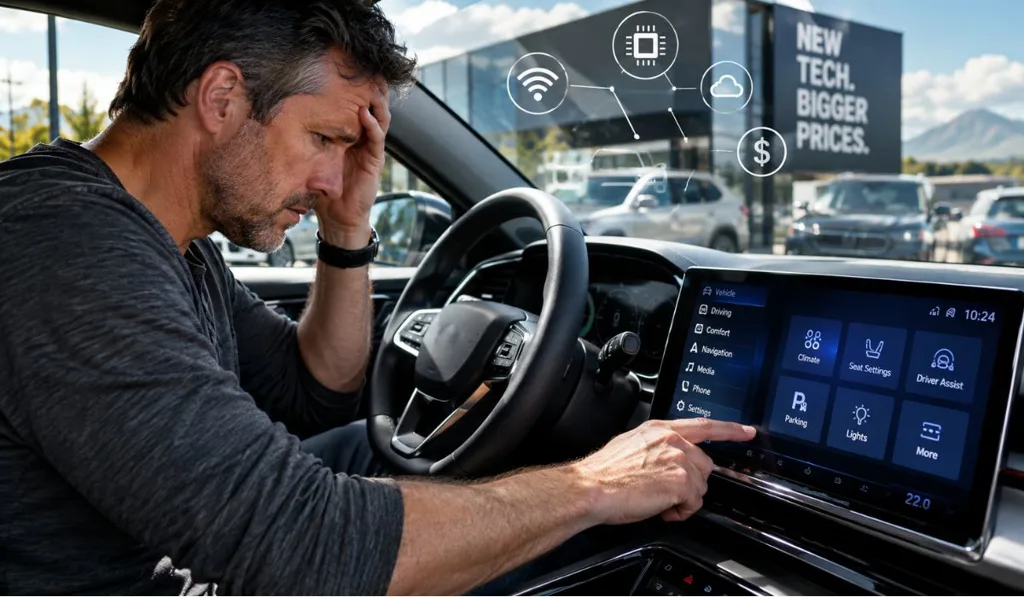
Is All the New Tech Killing Cars, the Environment... and Maybe Even You?
New cars are smarter, screens are bigger and prices are climbing. But are we actually getting better cars? From touchscreen distractions to costly repairs and software glitches, we were wondering whether all this technology is making motoring worse, then we found the answer.
You Really Need To Read This If You’re In The Market For A New Car.
I have just watched this amazing video that completely blew me away, saying everything I have believed for years and years without actually knowing how to articulate it properly. I have included the link to the video on YouTube for you to watch - subscribe to their channel; these guys give you the truth, no matter how brutal it is.
Let’s be honest for a moment. If you’ve walked onto a showroom floor lately, peered into the cockpit of a brand new R800,000 crossover, and felt like you’ve accidentally boarded a spaceship rather than bought a motor vehicle, you aren't losing your mind.
For years, many of us have had this persistent, low key feeling that modern cars are getting more complicated, more fragile, more ridiculously expensive, and frankly, a whole lot worse to actually live with every day. But trying to explain that to a polished dealership salesman, or to a colleague who just spent a small fortune on a high tech electric appliance with wheels, is an uphill battle. They look at you like you’re stuck in the past while pointing to a massive 15 inch floating tablet screen and lecturing you on "innovation."
Well, take a breath. The team over at ReDriven have finally hit the nail on the head, releasing a thoroughly researched, no nonsense video titled "New car tech sucks, here's why." It systematically lays out every single frustration motorists have been harboring for years.
If you want the full visual breakdown, do yourself a favor and check out the YouTube video here. Hit subscribe while you’re at it, because these creators don't pull their punches when it comes to industry realities.
For the rest of you, settle in as we unpack why modern car manufacturing has quietly turned into one of the biggest, most expensive confidence tricks of our generation.
1. The Convenience Myth: "It’s Built for the Driver, Boss!"
Let’s dismantle the biggest marketing con the automotive industry has been pushing: the idea that packing a vehicle with endless microchips, digital dashes, and AI assistants is an upgrade designed purely for your benefit.
It is pure, unadulterated marketing spin.
Car manufacturers aren’t doing this out of goodwill to make your morning commute down the N1 or M1 more relaxing. They do it for one fundamental reason: to maximize profit margins.
Automakers live and die by spec sheets and showroom checklists. A new model cannot be seen offering less than the outgoing vehicle, nor can it afford to be out specced by a rival brand. Yet, independent global research, including J.D. Power’s long running Tech Experience Index, consistently shows that drivers regularly use only a tiny fraction of these features. Most people just want reliable phone connectivity for navigation and music, clear parking sensors, and a decent reverse camera.
The vast majority of the remaining software suite sits untouched once the initial novelty fades. Yet, manufacturers continue to load vehicles with unnecessary tech simply to convince buyers that they're driving something revolutionary.
The Rise of Software Gated Features
As if inflating base prices wasn't enough, we’ve entered the era of software gated features, a practice that borders on highway robbery.
Imagine purchasing a brand new vehicle that physically contains all the required hardware, heated seats, adaptive headlights, or performance modes, only to discover the manufacturer has locked them behind a paywall. Thanks to built in cellular connections, automakers can enable or disable these features remotely via software tiers or monthly subscriptions.
It’s exceptionally convenient for them. It slashes their manufacturing complexity by standardizing hardware across the assembly line. But for the consumer, it means paying full price for hardware that remains functionally disabled unless you sign up for an ongoing monthly fee.
Touchscreens: Cheap Production Disguised as Luxury
Then there is the systematic elimination of physical buttons and dials. Remember when you could reach out, feel a physical dial for your climate control, turn it two clicks to the left, and adjust the temperature without taking your eyes off the road for a fraction of a second?
Today, almost every routine adjustment, from adjusting the side mirrors to altering the air conditioning, is buried inside nested menus on a large glass touchscreen. Why? Because it’s high tech? Hardly.
Ferrari CEO Benedetto Vigna openly admitted that touchscreen controls cost roughly 50% less to manufacture than traditional buttons and physical switches. Consolidating dozens of distinct functions into a single glass panel eliminates hundreds of individual components, reduces wiring harnesses, cuts durability testing, and simplifies assembly.
Screens have become remarkably cheap to mass produce. By removing tactile controls, car companies dramatically reduce engineering and production costs. But those savings aren't passed on to the buyer. Production costs decrease, showroom prices escalate, and the daily user experience degrades.
 Sponsored
Get 10% off all cameras and accessories including all Insta360 products
Capture every epic adventure! Shop all cameras & accessories, including the full Insta360 range of cams & gear, and enjoy 10% off every purchase until 31 Dec 2026. Use code MOTORIQ at checkout. Don't miss out on these savings – gear up and shop now!
SHOP NOW!
2. Complexity vs. Reliability: The Modern Mechanical Nightmare
While manufacturers save billions rolling out glass cockpits, consumers are left holding the bill for an uncomfortable reality: electronic complexity is the natural enemy of long term reliability.
Ask any independent mechanic or spend ten minutes on vehicle owner forums, and you will find that mechanical failures are no longer the primary headache for modern car owners. The top complaint by a wide margin involves glitchy infotainment software, freezing screens, and sensor failures.
J.D. Power’s dependability surveys consistently reveal that infotainment systems are the single largest problem category across the entire automotive industry, occurring at more than double the rate of exterior or body issues. Because so many primary functions are integrated directly into the center display, a software freeze or screen crash doesn't just mean losing your radio. It can leave you without climate control, reversing cameras, or basic vehicle settings. In severe cases, software glitches can trigger safe mode lockouts, rendering the car completely undrivable.
The EV and Hybrid Tech Trap
Electric vehicles (EVs) and plug in hybrids (PHEVs) present an even sharper contrast. On paper, a battery electric vehicle features significantly fewer moving mechanical parts than an internal combustion engine. Mechanically, it should theoretically be far more reliable.
Yet, Consumer Reports and industry reliability index data show that EVs and PHEVs suffer from significantly higher defect rates than traditional petrol or diesel vehicles. The culprit isn't necessarily the electric motors or the battery cells; it is the sheer volume of rushed, complex software managing the vehicle architecture.
Automakers are increasingly treating buyers like beta testers, pushing out unresolved software and relying on Over The Air (OTA) updates to fix issues post delivery. But as any smartphone owner knows, software updates eventually demand more processing power than aging hardware can deliver.
We are already seeing early high tech vehicles suffer from processor lag as their central onboard units struggle to run modern software updates. When central hardware ages out, replacing the computer modules can cost tens of thousands of rands, if replacement parts are even supported by the manufacturer. More often than not, the industry preference is for the customer to simply trade the vehicle in for a new one.
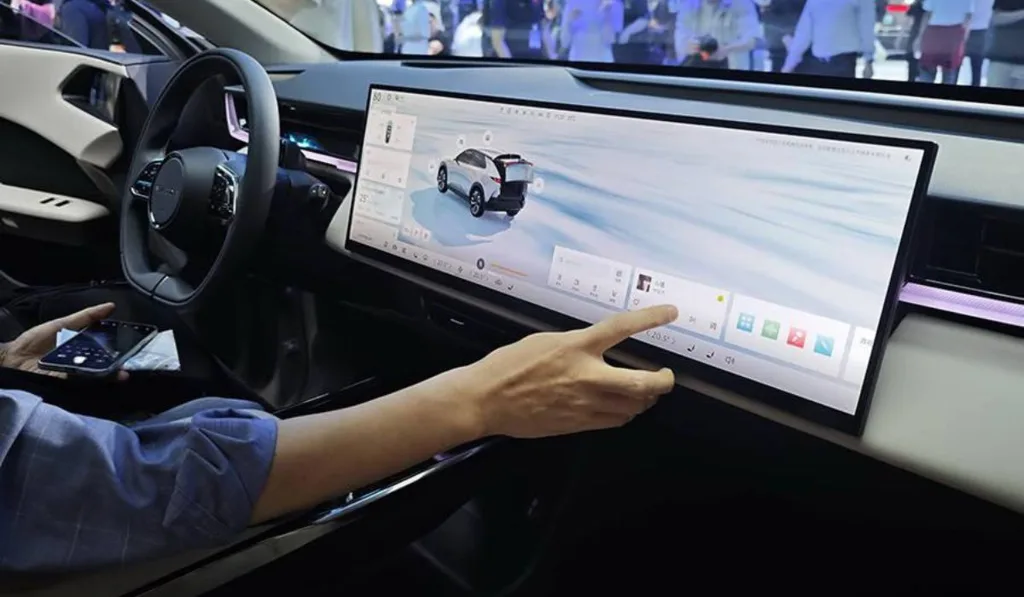 J.D. Power's 2026 Initial Quality Study found infotainment was the only major category in which reported problems increased year on year, with connectivity issues contributing to the decline.
 Sponsored
Advertise with Motor IQ today!
High-performance machinery deserves a high-performance marketplace. Sell your exotic exactly where automotive passion meets purchasing power.
Learn More.
3. Disposable Cars and the R25,000 Windscreen Replacement
This trend points directly to a concerning shift: motor vehicles are rapidly adopting the business model of disposable consumer electronics.
E-waste is already a massive global environmental hazard, responsible for a significant portion of toxic heavy metals in landfills. Now, automotive design is mirroring consumer tech strategies: integrated modules, sealed components, and software ecosystems that encourage short replacement cycles. The difference is that instead of a 200 gram smartphone, we are talking about a two ton vehicle.
This design philosophy makes modern cars increasingly difficult and costly to repair out of warranty. Independent workshops, the backbone of affordable motoring maintenance in South Africa, are progressively locked out by encrypted ECUs, proprietary diagnostic tools, and software authorization requirements. What used to be a simple mechanical repair now often requires official franchise dealer access at premium labor rates.
Minor Bumps, Major Financial Loss
It isn't just internal electronics driving up costs; standard exterior components have become exceptionally complex.
Take a modern front bumper or side mirror. In years past, clipping a side mirror was a minor inconvenience solved easily with an affordable aftermarket or scrapyard replacement. Today, a side mirror frequently houses blind-spot radar sensors, 360 degree cameras, heating elements, and puddle lights.
Consider windscreen replacements: on older vehicles, replacing cracked glass was straightforward and relatively inexpensive. On a modern vehicle equipped with Advanced Driver Assistance Systems (ADAS), the camera array mounted behind the glass requires precise electronic recalibration following a replacement. As a result, a standard windscreen replacement can easily run into tens of thousands of rands once calibration fees and specialized glass are factored in.
Insurance providers are taking notice. Vehicles are increasingly being written off following minor, low speed fender benders not because of structural chassis damage, but because replacing and recalibrating the front end sensor suites, LED lighting modules, and radar units exceeds the economic value of the vehicle. It represents an unprecedented level of material waste under the banner of modern technology.
Data Collection and Digital Vulnerabilities
Alongside repair costs, modern connected vehicles represent unprecedented levels of personal data collection and new security risks.
A modern connected car generates vast amounts of data per hour, transmitting location tracking, driving habits, and vehicle diagnostics back to cloud servers. Software heavy architectures also expand the vehicle's cyber attack surface. Remote exploits, keyless entry signal relay thefts, and CANbus system tampering have become widespread methods for tech savvy thieves. By tapping into exposed wiring harnesses or exploiting keyless access signals, criminals can bypass traditional immobilizers without ever needing physical access to a key.
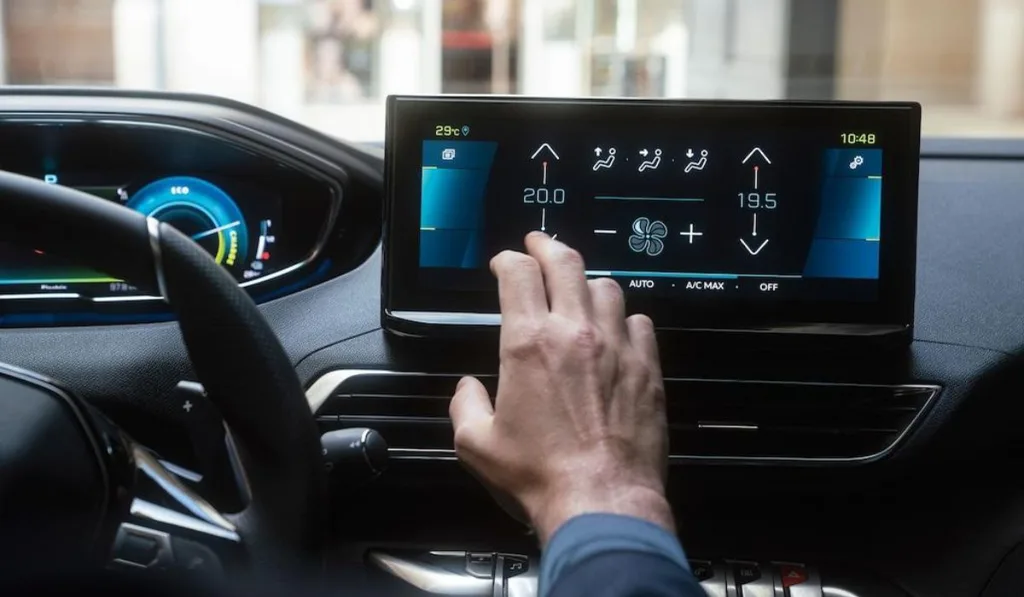 Allianz's October 2026 research highlights how cockpit design and touchscreen interfaces can increase visual distraction.
 Sponsored
Advertise with Motor IQ today!
Some cars aren't just transport, they're a passion. Connect with enthusiasts who appreciate the curves, the tech, and the drive.
Learn More.
4. Distraction by Design: The Safety Hazards of Touchscreens
Beyond the financial and environmental implications lies the most critical concern: over complicated vehicle technology is actively creating safety hazards on the road.
While road safety campaigns rightly target handheld smartphone use, car manufacturers have spent the past decade installing massive interactive screens directly into the center console, encouraging drivers to navigate visual menus while operating a vehicle at highway speeds.
A landmark study by Swedish motoring publication Vi Bilägare pitted 11 modern vehicles featuring screen centric dashboards against a 20 year old Volvo V70 equipped with traditional physical buttons. Drivers were timed performing standard tasks while driving at 110 km/h, such as adjusting climate settings, tuning the radio, and resetting trip computers.
The findings were revealing:
-
The classic Volvo, equipped with tactile buttons that could be operated largely by feel, required just 10 seconds of total driver distraction across all tasks.
-
The worst performing modern vehicle required a staggering 44.6 seconds of eyes off the road time to complete the exact same operations.
At 110 km/h, 10 seconds of distraction equates to traveling over 300 meters without full visual attention on the road. At 44.6 seconds, that distance extends to over 1.3 kilometers, (AN EXTRA KILOMETRE), driven essentially blindly while navigating screen sub menus.
Further research by transportation safety groups indicates that interacting with touchscreen infotainment interfaces can slow driver reaction times more significantly than driving at the legal blood alcohol limit.
The Paradox of Driver Assistance Systems
Proponents of modern vehicle tech often point to Advanced Driver Assistance Systems (ADAS), such as lane keep assist, adaptive cruise control, and automatic emergency braking, as necessary safety nets.
While emergency braking systems undeniably reduce low speed collisions in aggregate, safety research from institutions like the MIT Age Lab highlights an unintended consequence: driver adaptation and disengagement.
Studies show that as drivers grow comfortable with automated safety intervention, several predictable behaviors emerge:
-
Skill Degradation: Over reliance on automated systems reduces active driver engagement and awareness.
-
Shift in Risk Perception: Drivers tend to follow more closely and multitask more frequently, assuming onboard systems will catch mistakes.
-
Alert Fatigue: The overwhelming volume of constant beeps, chimes, and false warnings triggered by lane sensors or camera glare causes drivers to tune out or disable safety features altogether.
Furthermore, these systems rely heavily on clear road markings and optimal weather conditions. Throw fading lane paint or potholes on South African roads these days, heavy rain, or harsh road glare into the equation, and sensor calibration can degrade rapidly, leading to sudden disengagements or intrusive steering inputs when you least expect them.
The Verdict: Voting With Your Wallet
The uncomfortable reality facing the automotive landscape is clear: this shift isn't an accidental oversight by car manufacturers. It is the core business model.
Lower production costs via standard screens, software subscriptions, proprietary servicing locks, and shorter vehicle replacement cycles all contribute directly to manufacturer profitability.
For the average motorist, the most pragmatic solution may simply be to step back from the buying frenzy.
You don't need to sign up for astronomical monthly financing payments just to own a rolling tablet with short term software support. Well maintained, mechanically sound vehicles from ten or fifteen years ago, built when a car's primary purpose was to be a durable machine rather than a connected device, offer tactile usability, straightforward maintenance, and proven long term reliability.
Ironically, in an era obsessed with digital transformation, the most future proof vehicle on the road today might just be the simple, honest one already sitting in your driveway.
Credit to the team at ReDriven for tackling this topic head on. If you haven't yet, take a look at their full analysis on YouTube.
 South African mobility reporting is increasingly focused on affordability, financing, servicing and total ownership costs.
Sponsored
Get 10% off all cameras and accessories including all Insta360 products
Capture every epic adventure! Shop all cameras & accessories, including the full Insta360 range of cams & gear, and enjoy 10% off every purchase until 31 Dec 2026. Use code MOTORIQ at checkout. Don't miss out on these savings – gear up and shop now!
SHOP NOW!

Words and Photographs by:
Sean Motor IQ
From Grease Monkey to Industry Pro:
A Life Hustling Horsepower.
For Séan Hendley, "die koeël is deur die kerk" is not just a sayi… Read more →