New car buying guide South Africa 2026
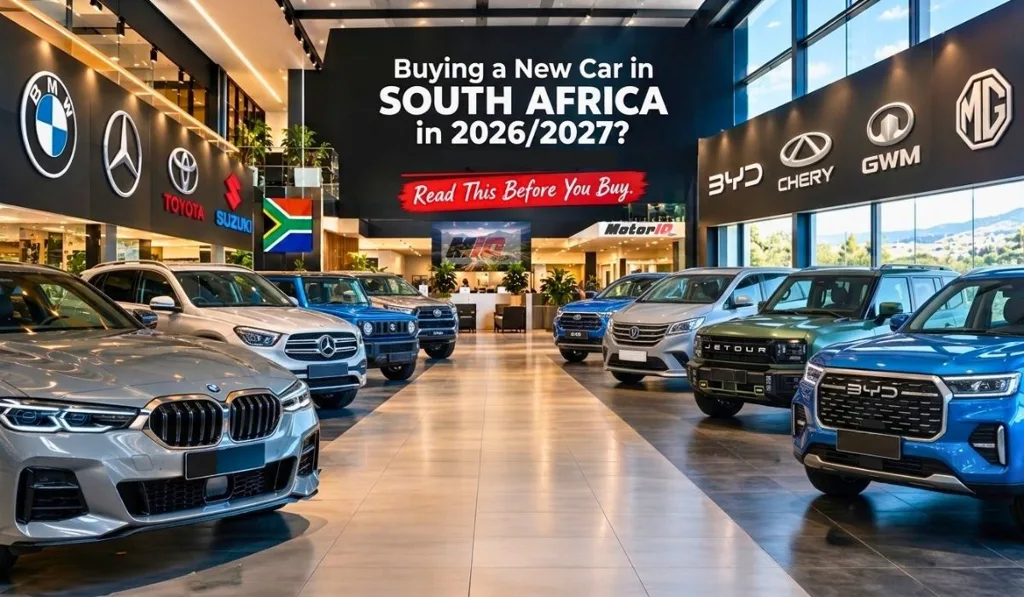
Buying a New Car in South Africa 2026? Read This Before You Buy!
Walk onto a showroom floor these days and you can feel the ground shifting under the polished tiles. Some long-standing badges are quietly packing up dealers, Chinese brands are flooding the space with aggressive pricing and long warranties, and where you buy can matter just as much as what you drive off in. The old assumption that the badge your family always trusted will still have a healthy network and decent trade in value five years from now is looking shakier by the month.
The Short Version
Overall, new vehicle sales are holding up. South Africa moved 644,523 units in 2014. The first half of 2026 alone delivered 315,303, already 36,148 ahead of the same stretch in 2025. That growth is not evenly shared. The premium end has been hollowed out while value driven Asian brands, led by the Chinese wave, have taken the volume. Before you commit to a multi year finance deal, you need to know which side of that line your chosen brand sits on.
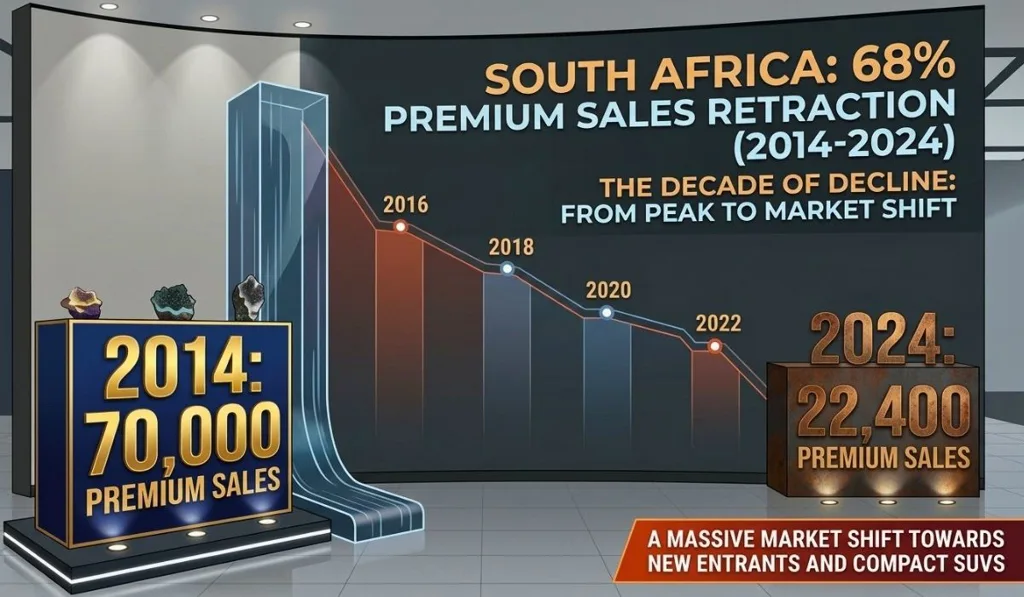 Combined premium German sales have fallen 68% in a decade.
Brands Shrinking Their Local Presence: 2014 to Today
Nobody is going to phone you with a polite heads up. Here is how the numbers actually played out.
The combined sales of Audi, BMW, Mini, and Mercedes Benz fell 68%, from 74,015 units in 2014 to 23,881 in 2024. Premium volume overall has collapsed from roughly 90,000 a year a decade ago to around 32,000 more recently. That is the backdrop.
A Quick Comparison (2014 to recent)
-
BMW: Sold 24,521in 2014 and by 2024 only 12,145 new vehicles, but gained ground in 2025 with13,265 new BMW's sold, a gain of 12%. However, dealership numbers have been trimmed from 55 in 2015 to 46 in 2024 . Good news for the brand though, in the first half of 2026, BMW Group led premium sales with 7,948 units.The Network may be smaller, but sales have stabilised and turned upward.
-
Mercedes-Benz: Were going great guns in 2014 with 28,993 new units sold, but things were looking a bit more bleak in 2024 with only 5,048 new units sold, a drop off a cliff at around - 82%. 2025 was marginally better at 5,413 units for the year. And in the first half of 2026 they're reporting 3,103 units (including vans). Exact dealer closures never published. Figures are estimates, Mercedes stopped supplying detailed model data years ago, (that seem tobe telling in itself).
-
Audi: Recorded 18,375 new unit sales in 2014, one of their best years ever; however, in 2025 that looks vastly different with only 5,350 new unit sales. The first quarter of 2026 is showing roughly 1,200 new unit sales for them. Approximately 76% decline over 12 years. At least four dealers closed that we have been able to determine, but the active network is now around 26, still solid with at least 1 dealership in major cities.
-
Volvo: Never a really big seller in South Africa, which is sad. In February 2013, they sold 211 cars, yet in February 2026 they only sold 82. Full-year sales for 2024 were around 1,428 units, which diminished in 2025 to 903 units, a drop-off of about 36.8%. Dealerships have been cut from 19 to 7, a massive 60% drop. The new Century City outlet opened, and Volvo is aiming to hit 6,000 to 7,000 units by 2030.
-
Nissan: Production used to run at around 54,000 units in 2012 at their Rosslyn factory, north of Pretoria, and they sold mostly all that they produced back then. 2025 sales peaked at about 15,085 units, representing a –32.3% retraction, out of the top 10. The Rosslyn plant was sold to Chery in 2026; Nissan has now become a pure importer, which, from experience, tells us that is going to push the price close to premium territory for an essentially Utilitarian vehicle- it doesn't bode well for the brand.
-
Honda: In February 2015 alone they sold 1,411 new vehicles, compared to total sales for a full year in 2025 just cresting 2,517 which is a –13.6% growth. They have trimmed their dealer network, especially outside big cities, with only 35 dealers remaining.
-
Lexus: Peaked in the early 2010s at 1,200 to1,400 new vehicle sales. In 2023, model sales tallied a mere 927, but it has always been a very niche brand. Dealerships have been reduced from 18 to 14 nationally, basically one in each big city.
Picture finishing a five year finance agreement, booking a routine service, and discovering half the showroom is dark with a notice directing you to another province. That is the practical risk of buying into a retreating network.
 Sponsored
Get 10% off all cameras and accessories including all Insta360 products
Capture every epic adventure! Shop all cameras & accessories, including the full Insta360 range of cams & gear, and enjoy 10% off every purchase until 31 Dec 2026. Use code MOTORIQ at checkout. Don't miss out on these savings – gear up and shop now!
SHOP NOW!
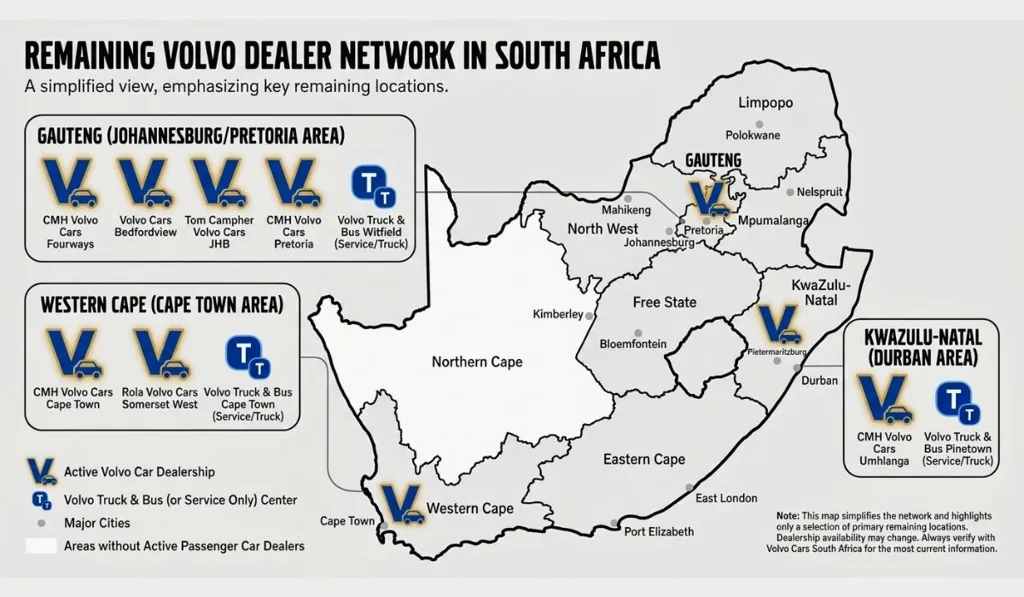 Some networks have shrunk dramatically. Volvo cut from 19 dealers to just seven.
Why Dealers Are Struggling
A franchise dealership is tightly controlled by the manufacturer right down to the floor tiles and lighting. Many sit on commercial leases of ten years or longer. When sales halve, the rent does not. High interest rates squeeze buyers further. Independent family run used car lots feel it even harder, walk in traffic has evaporated as buyers research online first. Big groups can absorb a rough quarter. Small ones living on an overdraft often cannot.
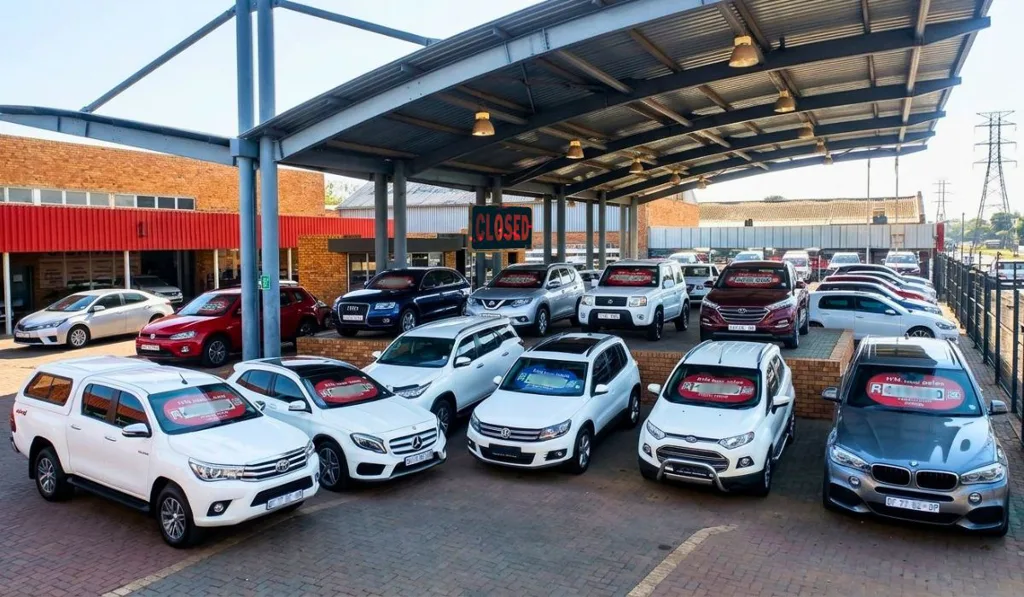 When sales drop, the rent doesn’t - many smaller dealers are feeling the pressure.
 Sponsored
Advertise with Motor IQ today!
Some cars aren't just transport, they're a passion. Connect with enthusiasts who appreciate the curves, the tech, and the drive.
Learn More.
Who’s Gaining Ground
Buyers have not stopped buying. They have moved. Chinese brands lifted their passenger car share from roughly 1% in 2015 to 15 to 16.8% in 2025 and around 19 to 20% in early 2026. Chery returned in late 2021 with 30 outlets and had 95 by March 2025. Haval, Jetour, Jaecoo, Omoda and the rest followed with long warranties, high equipment levels and prices that undercut comparable European metal by hundreds of thousands of rand.
However, Toyota remains resilient thanks to bakkie production and unmatched rural parts availability. Suzuki continues to dominate the affordable, frugal commuter space. Larger dealer groups are shifting toward multi brand superstores so the business survives even if one badge falters.
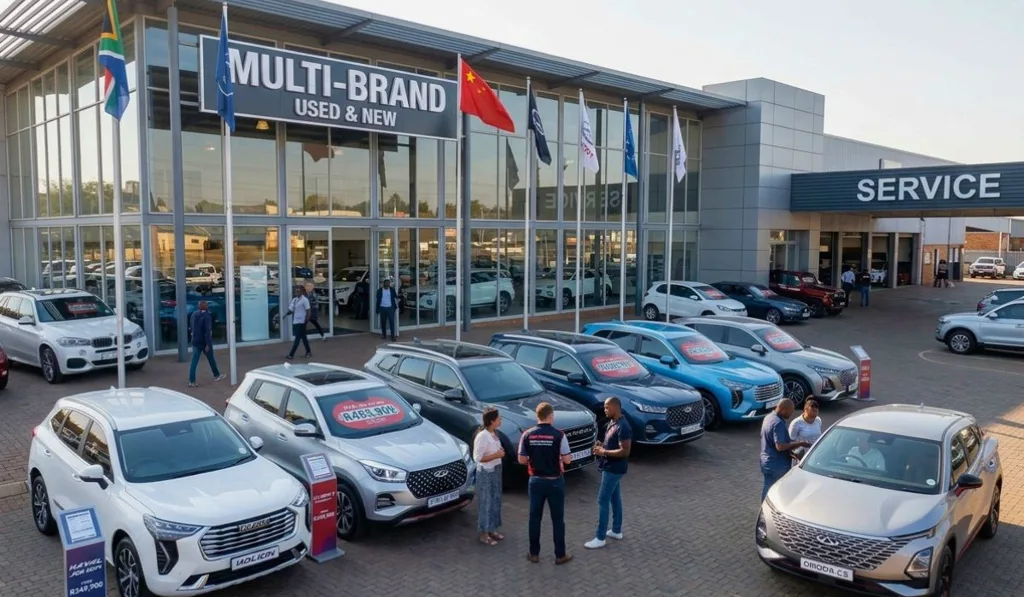 Chinese brands have grown from 1% market share in 2015 to around 19 to 20% in early 2026.
 Sponsored
Advertise with Motor IQ today!
High-performance machinery deserves a high-performance marketplace. Sell your exotic exactly where automotive passion meets purchasing power.
Learn More.
The First Realistic Batch of Chinese Cars Hits the Five Year Trade In Wall.
This is the new wrinkle most buyers still underestimate. The first proper wave of Chinese models that arrived in volume four to five years ago is now reaching typical trade in age. Combined Motor Holdings (which represents several of these brands) reported in its 2026 interim results that residual values have fallen more sharply than many owners expected. Some are discovering they owe the bank more than the car is worth and are forced to hang on longer until the numbers align.
The data is still maturing and not uniform. Three year retention for volume models such as the Haval Jolion and Chery Tiggo 4 Pro has often landed in the 48 75% range, depending on source, mileage, condition, and exact derivative. That is competitive with or better than some mainstream Korean and European rivals, though still trailing Toyota’s stronger numbers. Five year projections and early trade experience sit lower, commonly in the high 30%s to mid 40%s of original price for many Chinese SUVs. On a R450,000 purchase, that can mean tens of thousands of rand less residual value than an equivalent Japanese or Korean model.
Newer entrants (Omoda, Jaecoo, certain BYDs) have even less history, so the uncertainty is higher. The sheer volume of fresh Chinese metal arriving every month also keeps pressure on used prices. Long warranties help during ownership, but they do not automatically protect the trade in value. Keep the car seven or eight years, and the lower purchase price can still make the equation work. Treat five years as the natural exit point and the residual gap becomes a real cost of ownership that needs to be factored in from day one.
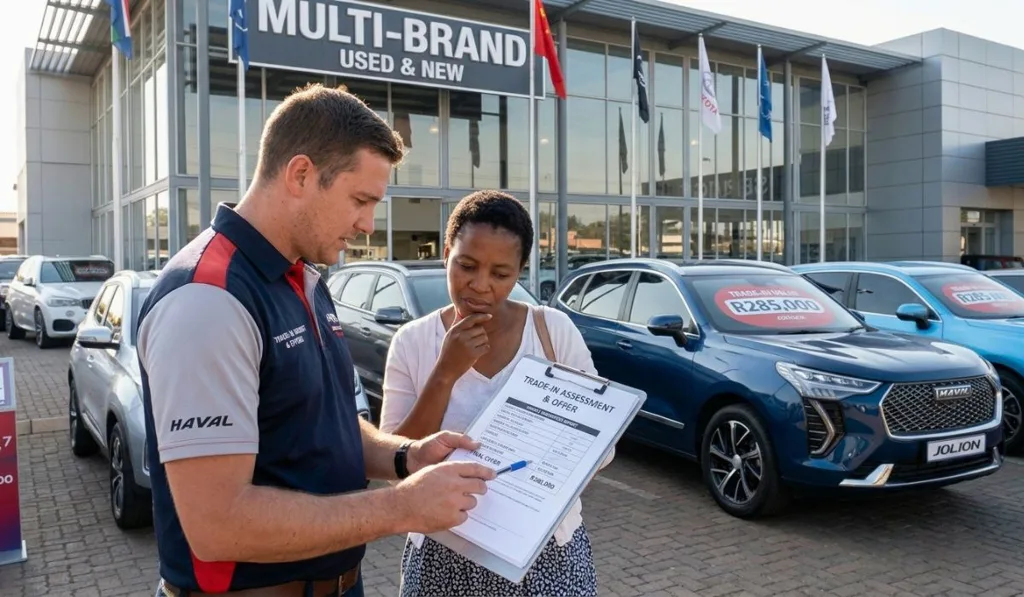 The first realistic five year trade ins are already revealing residual surprises for some owners.
Sponsored
Advertise with Motor IQ today!
High-performance machinery deserves a high-performance marketplace. Sell your exotic exactly where automotive passion meets purchasing power.
Learn More.
What This Means for You
The old rule of simply buying the badge the family always trusted no longer holds the way it used to. Before you sign, ask:
-
Where is the nearest authorised service centre, and is it staying open?
-
How easy is it to get parts? Toyota’s rural reach remains a genuine advantage.
-
Is the brand growing or retreating locally? Look at dealer count and multi-year sales trend, not just the latest brochure.
-
What does the warranty actually cover, and who will honour it if the local dealer disappears?
-
Is the dealer part of a larger group that can weather a bad patch?
-
What are realistic residual values at the end of your planned finance term – and what are the terms attached to those predicted residuals – especially if you are looking at a Chinese brand whose first big wave is only now hitting the used market?
The Bottom Line.
The showroom of 2014 is gone for good, and blind brand loyalty went with it. What matters now is value for money, parts availability, network stability, and whether the brand (and its dealers) will still be standing when you need them. The Chinese offerings have rewritten the new car equation with price and specification. The first realistic residual data shows the used car side of that equation is still catching up, and for some early buyers it has already delivered an unwelcome surprise.
Do the homework before you sign. Nobody is going to phone and warn you afterwards.
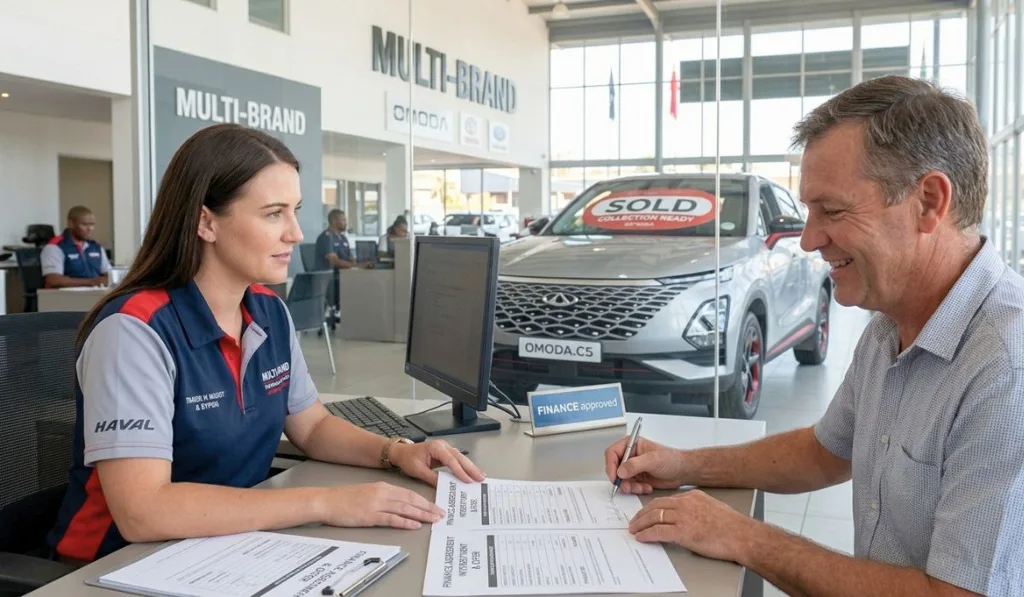 Six questions every buyer should ask before signing on the dotted line.

Words and Photographs by:
Sean Motor IQ
From Grease Monkey to Industry Pro:
A Life Hustling Horsepower.
For Séan Hendley, "die koeël is deur die kerk" is not just a sayi… Read more →