The Ultimate Guide to Paramotoring: Strap a lawnmower to your back and touch the sky
Let’s be entirely honest with ourselves. At some point, every human being has looked up at a bird and thought, “Man, I wish I could do that, but without all the vomiting up of half-digested worms.”
For decades, aviation told us that if we wanted to fly, we needed to spend millions of Rands, sit inside a metal tube that smells like stale coffee, or jump out of a perfectly good airplane while screaming for our mothers.
Then came paramotoring.
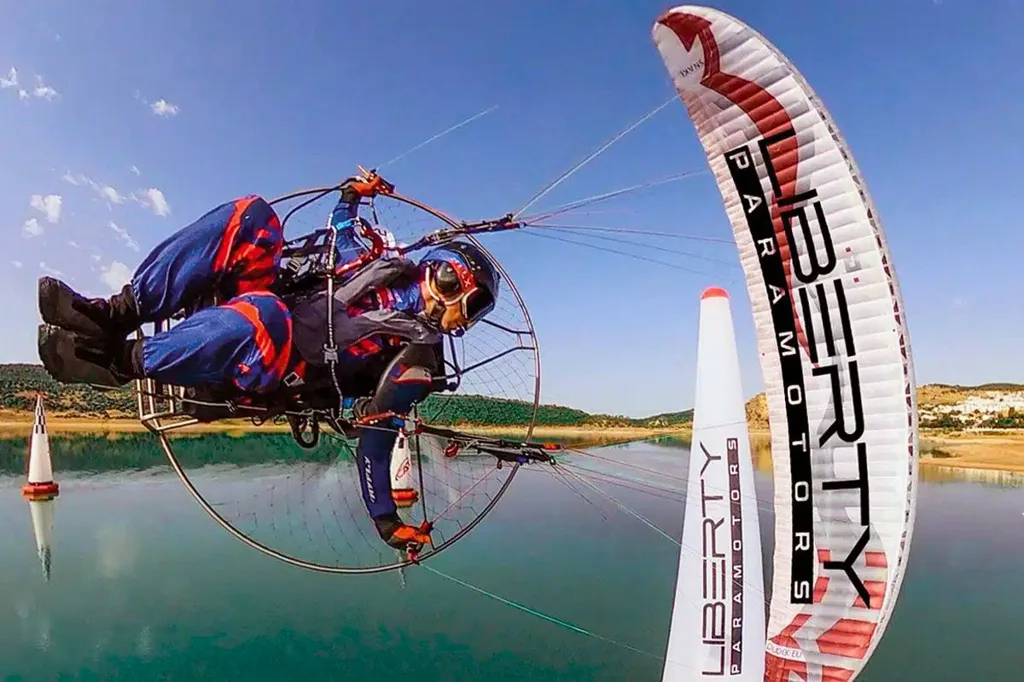
Imagine taking a perfectly good parachute, strapping a high-powered weed-whacker to your back, pulling a throttle with your hand, and running off a hill until you’re suddenly waving at cows from a thousand feet in the air. It is glorious. It is ridiculous. It is the closest thing to absolute freedom available on this beautiful, chaotic planet.
Welcome to the ultimate guide to Powered Paragliding (PPG). Let's break down how you can join the ranks of the cloud-botherers.
 PICS: Gathered from wherever I found cool pics on the internet. If I borrowed some of yours - Thanks! I hope this article gets more interest in your sport
 Sponsored
Advertise with Motor IQ today!
High-flyers don’t scroll standard classifieds. Get your aviation gear in front of the pilots, dreamers, and aero-nuts who actually look up.
Learn More.
1. The Anatomy of a Flying Lawnmower (The Tech Specs)
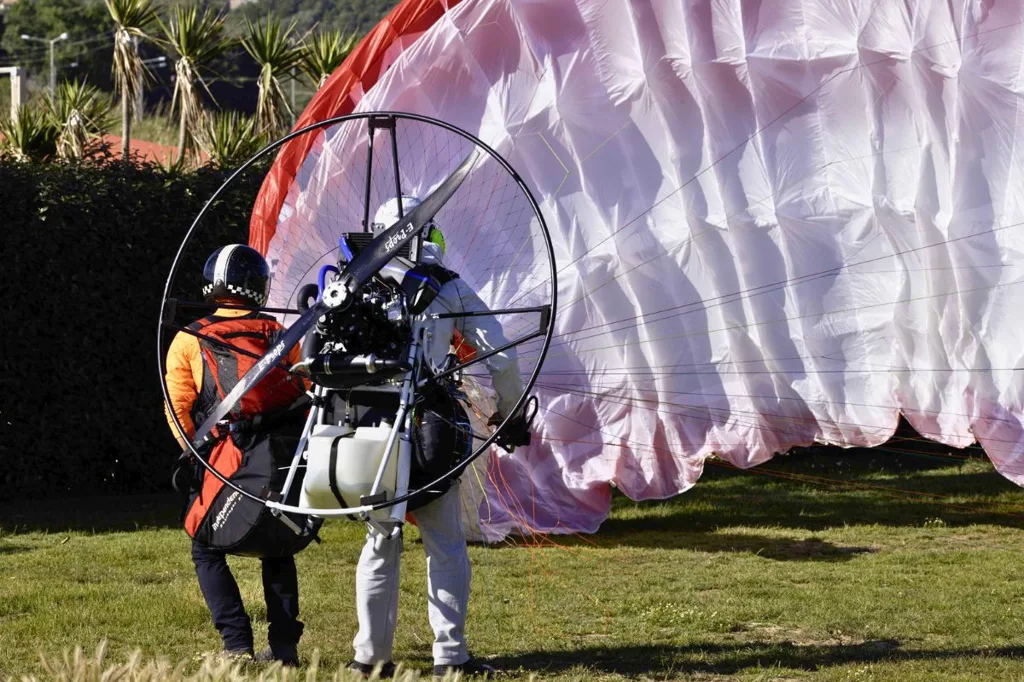
To the uninitiated, a paramotor looks like an industrial fan that took a wrong turn at a hardware store. But it's actually an elegant, highly engineered piece of aviation kit. The entire setup is divided into two main components: The Wing and The Motor.
[ The Wing / Glider ] <--- High-tech, inflatable nylon airfoil
|
| (Suspension Lines)
|
[ The Paramotor Unit ] <--- Frame, Harness, Engine, and a Propeller
The Motor Unit
You wear this like a massive, heavy backpack. It consists of:
-
The Frame and Cage: Usually made of aircraft-grade aluminum, titanium, or carbon fiber. The cage is there for one vital reason: to stop the spinning propeller from turning your fingers into boerewors.
-
The Engine: Usually a lightweight two-stroke gas engine (ranging from 80cc to 300cc, though four-strokes and high tech electric motors are creeping into the market. They push out between 20 to 35 horsepower. That doesn't sound like much until it's bolted directly to your spine.
-
The Harness: The seat you strap yourself into. Once you are airborne, you slide back into it and sit comfortably, letting your legs dangle over the scenery.
The Wing
This is not a round, drag inducing parachute that you use to survive a crashing plane. It is an elliptical, ram air airfoil made of high strength ripstop nylon. When you run forward, air pushes into the open cells at the front of the wing, inflating it into a rigid, solid structure that creates lift just like a Boeing 747 wing. Wings are not always strictly elliptical; many are designed specifically for paramotoring with reflex or stability features. "Pull both to slow down" is simplistic, proper flare timing is key for safe landing.
How You Control the Beast
You hold a hand held throttle in one hand to control your altitude (more gas = climb, less gas = sink). As well as steering toggles (brakes) in both hands, connected to the trailing edge of the wing. Pull right to go right, pull left to go left, pull both to slow down and land like a majestic eagle. Or, if you mess up, like a dropped sack of potatoes.
 You cannot just buy a paramotor off the internet, drive to the local park, and blast off.
Sponsored
Advertise with Motor IQ today!
High-flyers don’t scroll standard classifieds. Get your aviation gear in front of the pilots, dreamers, and aero-nuts who actually look up.
Learn More.
2. Safety, Statistics, and Not Dying: The Brutal Truth
Alright, let's address the elephant in the airspace. You are dangling from strings over hard rocks with a spinning blade behind your head. Is it safe?
The short answer: Yes, if you aren't an idiot. It is relatively low compared to many adventure sports, but exact numbers vary; SAHPA/SACAA track incidents."
The long answer: Aviation safety is entirely dependent on the meat sack pulling the controls.
Because a paramotor wing has "passive safety," if your engine completely dies mid flight, you don't plummet like a stone. You just become a regular paraglider. You glide quietly down to earth and look for a nice patch of grass to land on. Furthermore, almost all pilots fly with a reserve parachute packed into their harness. If the main wing catastrophically fails, you pull a pin, throw out the laundry, and float down.
The Pros and Cons
|
The Pros
|
The Cons
|
|
Ultimate Freedom: No runways required. Launch from a flat field.
|
Weather Dependent: You are the wind's plaything. Strong winds mean staying grounded.
|
|
Portability: Fits in the back of an SUV or bakkie.
|
Heavy Lifting: Running with 30kg of metal on your back requires some leg strength.
|
|
Low Maintenance: Compared to owning a real plane, it costs peanuts.
|
Noise: It sounds like a leaf-blower on steroids. Neighbors will glare.
|
South African Accident Realities (The Last 10 Years)
In South Africa, the South African Hang Gliding and Paragliding Association (SAHPA) and the SACAA keep tabs on incidents. Over the last decade, actual fatal paramotor accidents in SA are incredibly low, averaging fewer than 1 to 2 fatalities per year.
The vast majority of injuries recorded are minor to moderate (around 10-15 significant incidents annually nationwide). They almost always fall into three categories:
-
Propeller bites: Idiots starting the engine on the ground while holding the frame wrong, resulting in shredded fingers.
-
Ankle snaps: Tripping over a molehill during takeoff or landing because you forgot how legs work.
-
Low-level acrobatics: Showing off for a girlfriend, getting caught in rotor turbulence near trees, and executing an unplanned meeting with mother earth.
 Do not let Dave from the pub teach you. Go to a SAHPA registered school.
Sponsored
Advertise with Motor IQ today!
High-flyers don’t scroll standard classifieds. Get your aviation gear in front of the pilots, dreamers, and aero-nuts who actually look up.
Learn More.
3. The Law, The License, and The Academies in South Africa
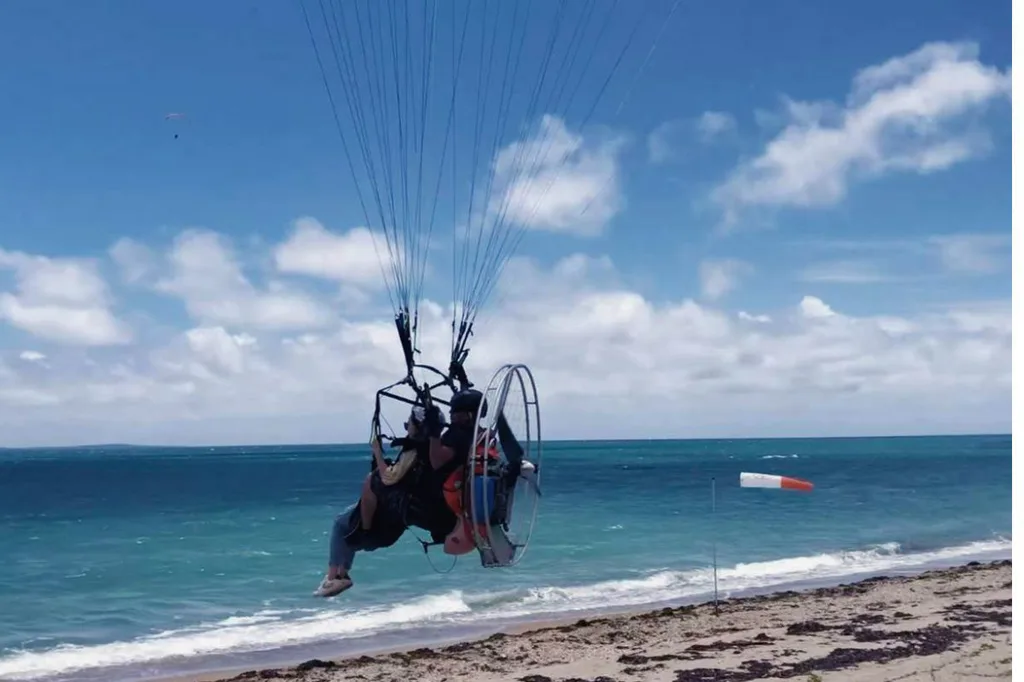
You cannot just buy a paramotor off the internet, drive to the local park, and blast off. If you do, the South African Civil Aviation Authority (SACAA) will descend upon you with the wrath of a thousand suns.
The Legalities & Accreditation
In South Africa, paramotoring is legally regulated under SACAA Civil Aviation Regulations (Part 94). To legally fly, you need:
-
A National Pilot Licence (NPL) with a Powered Paragliding (PPG) rating.
-
To get that, you first complete a Basic Paragliding License, followed by a PPG Conversion Course.
-
A Restricted Aircraft Radio License (so you can talk to air traffic control if you encroach on controlled airspace).
-
Current membership with SAHPA, which automatically provides you with mandatory 3rd Party Liability Aviation Insurance (in case you accidentally crash through someone’s expensive lapa roof).
Top Training Academies in South Africa
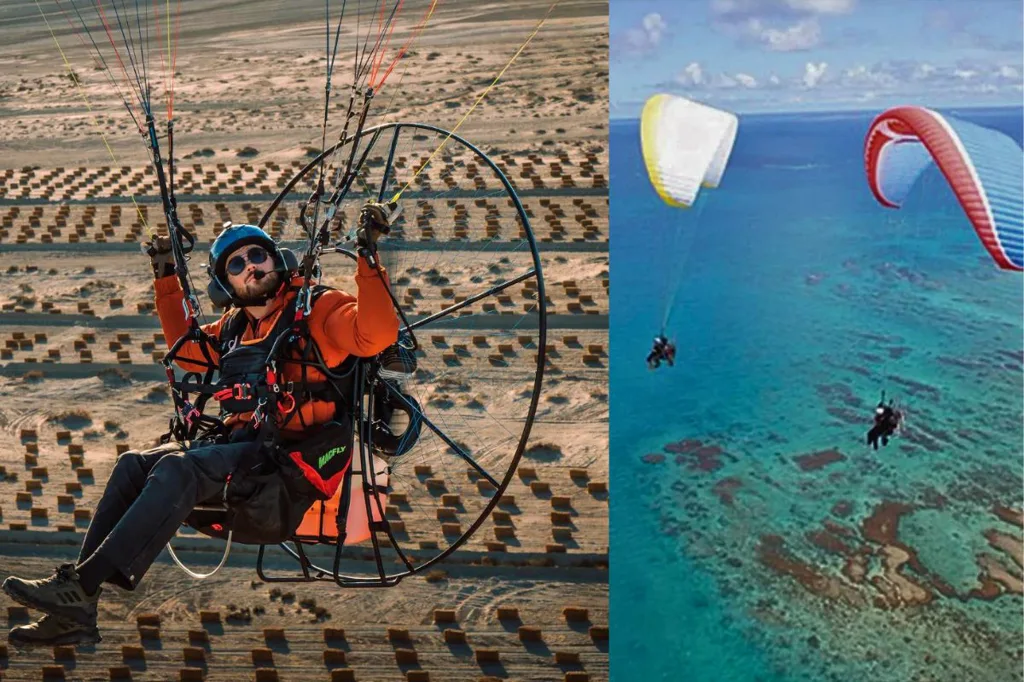
Do not let "Dave from the pub" teach you. Go to a SAHPA registered school. SAHPAregistered DTOs (Declared Training Organisations)" and always check the current SAHPA schools list.
Some of the most highly regarded academies include:
-
Cloudbase Paragliding (Western Cape/Garden Route): Based around George and Wilderness. Unbelievable coastal flying conditions and top tier instruction.
-
Skywings Paragliding (Cape Town): Brilliant for those based in the Mother City, offering thorough licensing courses.
-
Paragliding South Africa/Epic Aviation (Gauteng/Hartbeespoort): If you are up north, flying around the Magaliesberg and Hartbeespoort area is prime paramotor territory.
-
Apex Adventures (Grasslands, Centurion—very active in Gauteng)
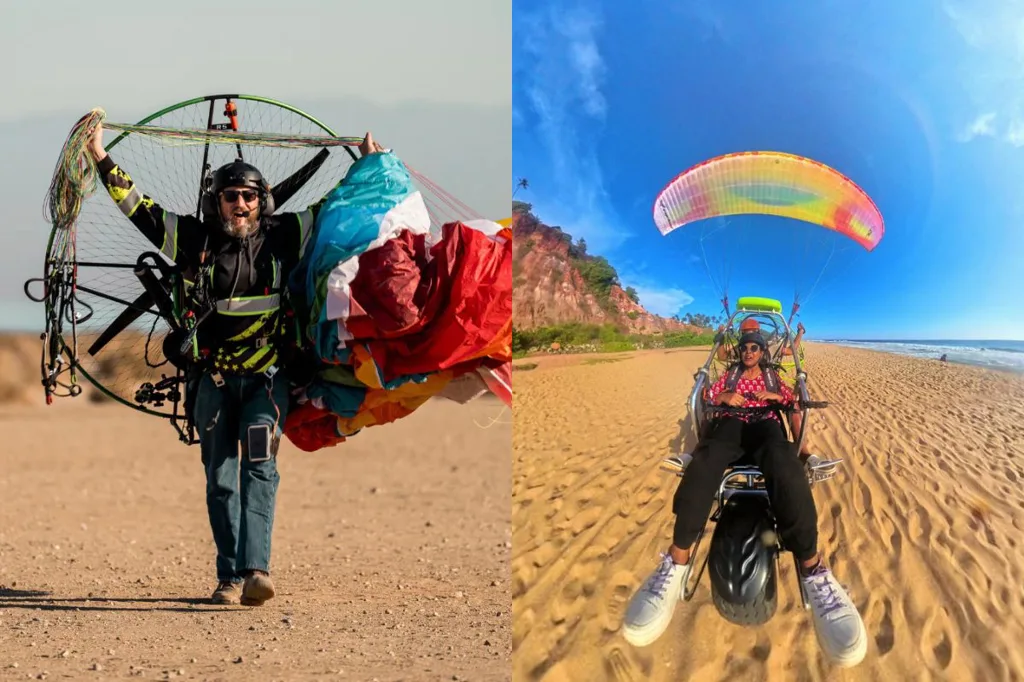 There is an active community of sky-addicts across South Africa.
 Sponsored
Advertise with Motor IQ today!
General aviation isn’t a casual hobby, it’s a precision market. List your light aircraft where the right pilots, syndicates, and buyers are actually looking.
Learn More.
4. The Social Scene: Clubs and Epic Adventures
Paramotoring might look like a solo sport, but pilots are notoriously social creatures. There is an active community of sky-addicts across South Africa.
Social Clubs
Once you get your license, you'll join regional clubs aligned with SAHPA. In Gauteng, the Grass Roots Paramotor Club is highly active. Down in the Cape, local WhatsApp fly-groups organize weekend fly-ins where twenty pilots gather at dawn, fly to a local farm stall for breakfast, and fly back before the midday wind picks up.
Adventure Trips
This is where the sport truly shines. South Africa is arguably one of the best paramotoring destinations on earth.
-
The Karoo Safari: Imagine flying over the vast, flat expanse of the Karoo at sunrise, looking down at springbok scattering across the plains.
-
The Garden Route Coastal Cruise: Flying low over the surf line alongside dolphins and whales between Wilderness and Brenton-on-Sea.
-
The Wild Coast Expedition: True adventure flying over uninhabited river mouths, dramatic cliffs, and rolling green hills where roads don't even exist.
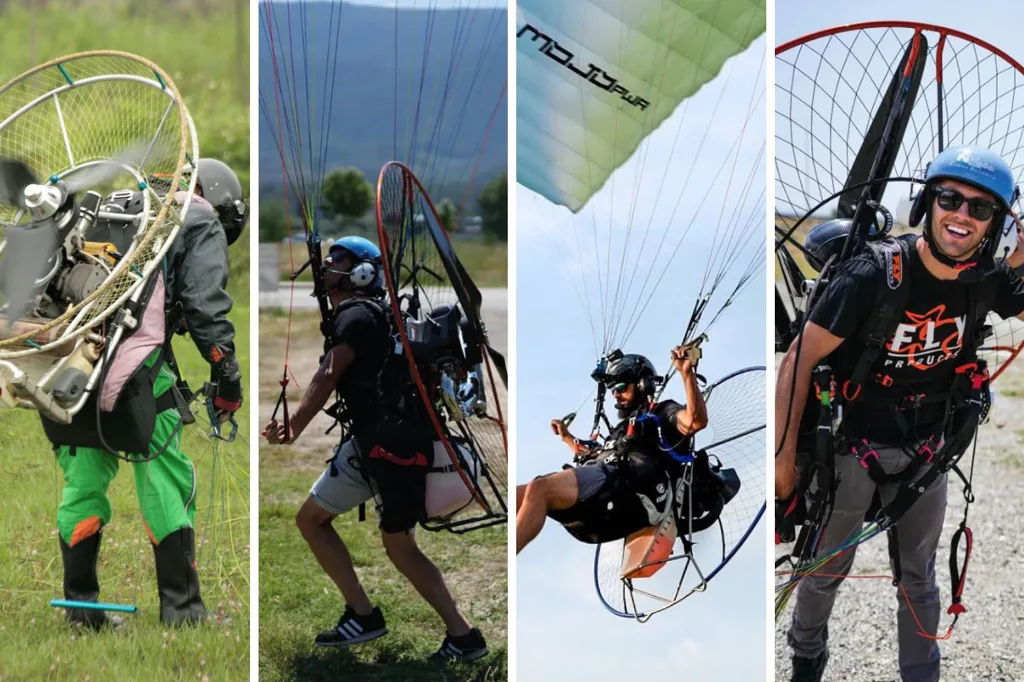 Join regional clubs aligned with SAHPA.
Sponsored
Advertise with Motor IQ today!
High-flyers don’t scroll standard classifieds. Get your aviation gear in front of the pilots, dreamers, and aero-nuts who actually look up.
Learn More.
5. The Financial Damage: Cost of Entry and Ownership
Let's talk money. Flying is never truly "cheap," but paramotoring is the cheapest way to own a motorized aircraft. Here is a realistic breakdown of the costs involved in South Africa.
Initial Startup Costs (The "Ouch" Phase)
Buying brand-new, high-end gear from top global manufacturers (like Parajet, Air Conception, or Scout for motors, and Ozone, Dudek, or Niviuk for wings) will look roughly like this:
|
Item
|
Estimated Cost (ZAR)
|
|
Professional Training & Licensing
|
R20,000 – R35,000
|
|
New Paramotor Unit (Engine, Frame, Harness)
|
R120,000 – R180,000
|
|
New Beginner-Rated Wing
|
R45,000 – R65,000
|
|
Safety Gear (Reserve Parachute, Helmet, Comms)
|
R15,000 – R25,000
|
|
TOTAL STARTUP COST
|
R200,000 – R305,000
|
Pro Tip: You can buy excellent secondhand gear for about half of this price, but never buy a secondhand wing without an experienced instructor inspecting it first. Porous cloth kills.
Cost of Ownership (The "Per Flight" Cost)
Once you have sucked up the initial gear shock, the ongoing cost of flight is beautifully, hilariously cheap.
The average two-stroke paramotor consumes about 3 to 4 liters of fuel per hour. It runs on regular 95-octane unleaded petrol mixed with high-quality two-stroke synthetic oil.
-
Fuel & Oil per hour: ~R120
-
Maintenance reserves (spark plugs, propeller nicks, belt replacements, 100-hour engine services divided out): ~R100 per hour.
-
SAHPA Annual Renewal & Insurance: ~R2,500 per year (pennies per flight if you fly often).
-
This means that a spectacular, one-hour flight over the countryside at sunrise costs you roughly R220 to R250 in operating costs. That is cheaper than a mediocre burger and a beer at a trendy restaurant.
Disclaimer: Costs fluctuate; always use current SAHPA/SACAA-approved sources and inspect gear.
The Verdict
Paramotoring is noisy, it makes you look like a human bumblebee, and it requires you to run like a madman across open fields. But the moment your feet leave the grass, the engine roars, and you realize you are sitting on air, looking down at the world from a vantage point once reserved only for gods and eagles, every single cent and every bit of sweat becomes completely worth it.
Find a school, book an introductory tandem flight, and go get your wings. Just mind the molehills.
If you’re keen to get involved, start with a tandem intro at a reputable school like Cloudbase or Apex.
Safe skies!
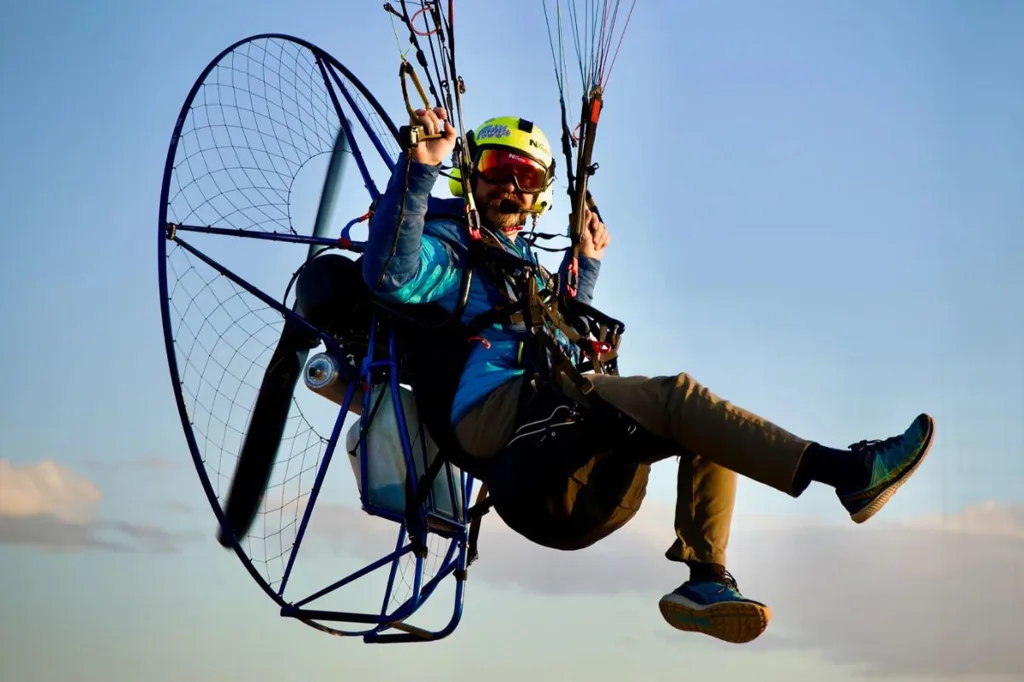 looking down at the world from a vantage point once reserved only for gods and eagles.
Sponsored
Advertise with Motor IQ today!
General aviation isn’t a casual hobby, it’s a precision market. List your light aircraft where the right pilots, syndicates, and buyers are actually looking.
Learn More.

Words and Photographs by:
Motor IQ Office Skivvy
Behind every sharp story, clean gallery and late night news drop on Motor IQ, there’s a quiet creative force keeping the wheels turning. Read more →