A quick look at the Volswagen Caravelle eHybrid
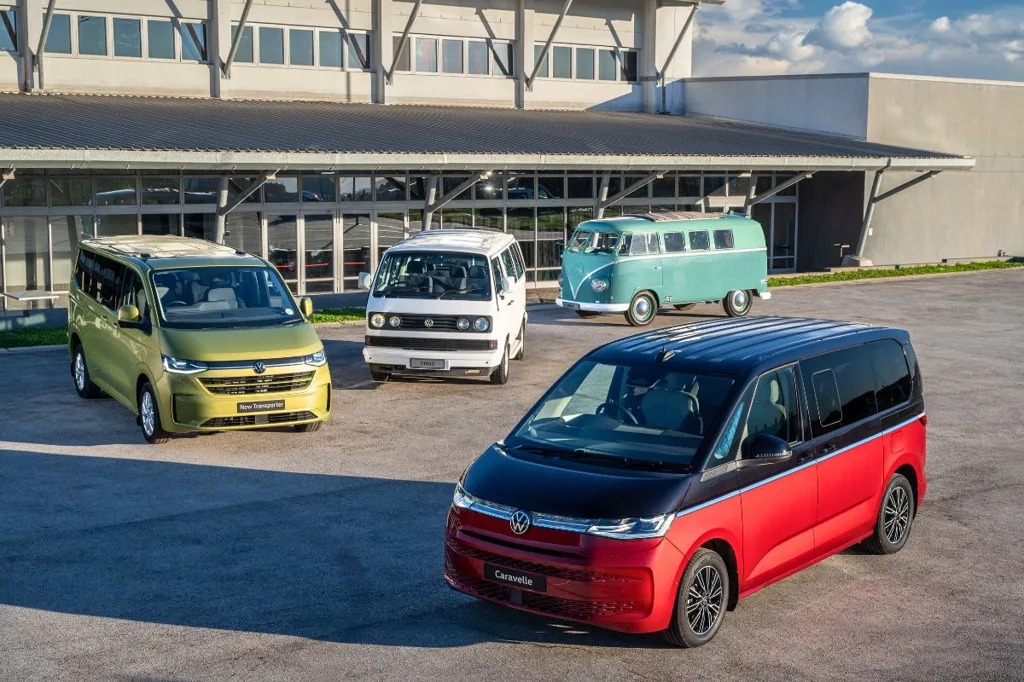
Volkswagen Caravelle eHybrid: How Much Is Enough?
Volkswagen’s new Caravelle eHybrid brings 180 kW, 350 Nm, plug-in electric power and 4MOTION to South Africa. Clever? Absolutely. But at R1.794 million, 91 km electric range and a very complicated drivetrain, we have questions.
Maybe I am too jaded, work too hard for my money, maybe it is because I am stuck in a bygone era, or don’t understand new technology, but I am really underwhelmed by a lot of the new vehicles and their tech, as well as being overwhelmed by the pricing of some vehicles/brands. A few years back, Ferdinand Porsche designed VW’s simple, reliable, easy to maintain affordable People Carriers, now they seem to have become status symbols from the entry level Polo to this flagship VW Caravelle eHybrid, unaffordable to all but the very elite of society. So! Yes, when I do read about a new vehicle like this new Volkswagen (Peoples Wagon…. see the irony that I see?), I do have questions.
180 kW, 4MOTION, nearly 100 km of electric driving and a seven seat cabin. Sounds impressive. And yes, at R1.794 million, there are some questions Volkswagen needs to answer rather than simply expecting buyers to admire the technology.
Volkswagen has launched the new Caravelle eHybrid in South Africa, and on paper it is an impressive piece of engineering. It is also a very expensive one.
The new Caravelle combines a 1.5-litre turbocharged petrol engine, electric propulsion, a 19.7 kWh high-voltage battery, six-speed DSG transmission and electrically driven 4MOTION all-wheel drive to produce a combined 180 kW and 350 Nm.
It can travel up to 95 km on electric power alone, according to Volkswagen, with a claimed combined driving range of up to 700 km, (that is probably on a downhill, with a tailwind, no passengers or load onboard and slip streaming behind a truck,) All of which sounds rather good. But before we start throwing around words like revolutionary, let's ask what all of this actually means to somebody in South Africa who has to pay for it.
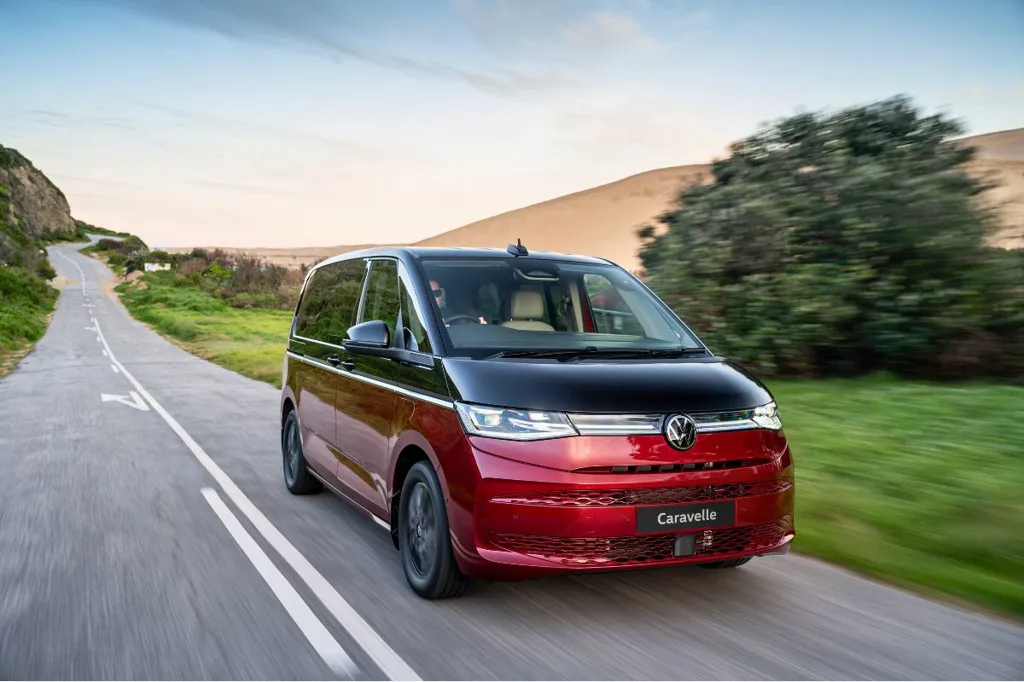 IQ.LIGHT LED Matrix headlights.
Nearly R1.8 million buys a lot of vehicle
Let's get the uncomfortable number out of the way first. R1,794,000. That is the recommended retail price of the Volkswagen Caravelle eHybrid, including VAT and emissions tax. That's not an insignificant amount of money for a seven seat people carrier, regardless of how sophisticated its drivetrain happens to be.
And this is where the Caravelle eHybrid becomes interesting rather than simply impressive.
Volkswagen clearly isn't pitching this at the average family looking for an affordable school run vehicle. With this money, the prospective customer is likely to be a wealthy private buyer, executive transport operator, business, hotel, tourism company or someone who simply wants one of the most sophisticated people carriers Volkswagen sells.
There's nothing wrong with that. But Volkswagen shouldn't try convincing ordinary South Africans that this is some sort of mainstream family mobility solution. At R1.794 million, it isn't.
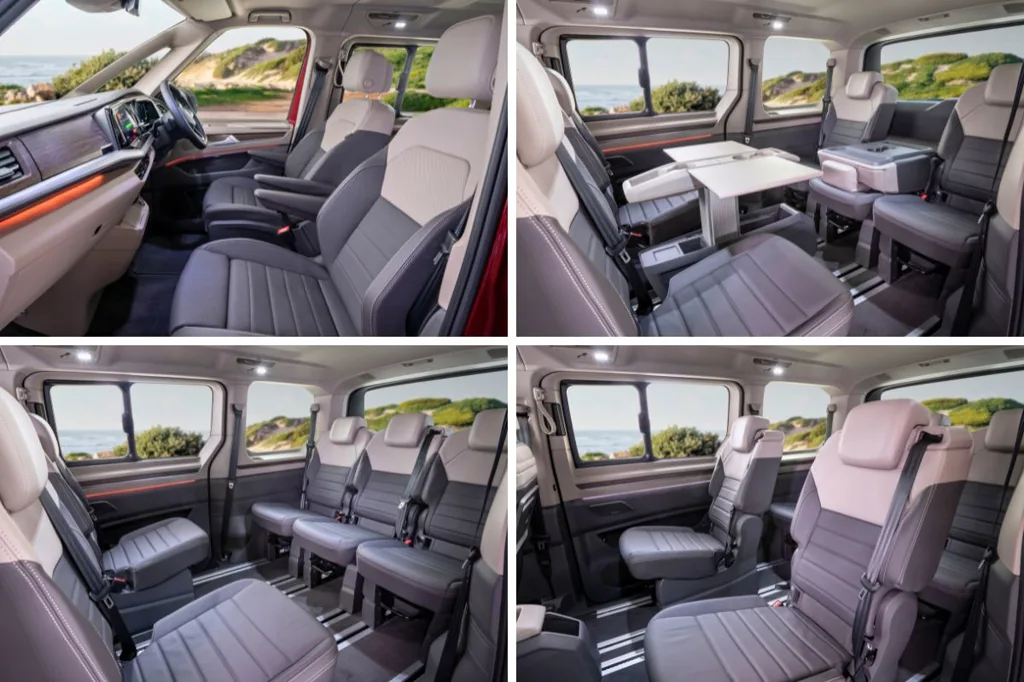 Spacious, well appointed 7 seat interior.
 Sponsored
Advertise with Motor IQ today!
Ready for the next bush break? Stop hunting across random groups, list your overland setups and tough trailers where the explorers shop
Learn More.
So, what exactly are we buying?
The eHybrid combines a 130 kW, 250 Nm 1.5 TSI evo2 turbocharged petrol engine with an electric motor integrated into the DSG transmission. Together, the system produces 180 kW and 350 Nm. That's a healthy amount of power for a large seven seater, and the electric motor's instant torque should make the Caravelle feel considerably more responsive around town than its size suggests.
The battery can provide up to 95 km of electric-only driving, while Volkswagen claims up to 700 km of combined range. But those are maximum figures, (and curiously VW has left out claimed fuel efficiency as well as fuel tank size from the spec sheet…..). In my experience, with different new vehicles, SUV’s in particular in South Africa today, most of them seem to be returning around 10 litres per 100km’s, the same as my 20 year old, permanent 4 wheel drive, 2.7 ton, brick shaped Land Rover…???
The more useful question for South African buyers is what happens when this big, heavy vehicle is loaded with seven people, luggage, air-conditioning and travelling at normal freeway speeds. We don't yet have that answer. And “up to 700 km” isn't the same thing as 700 km in everyday South African conditions.
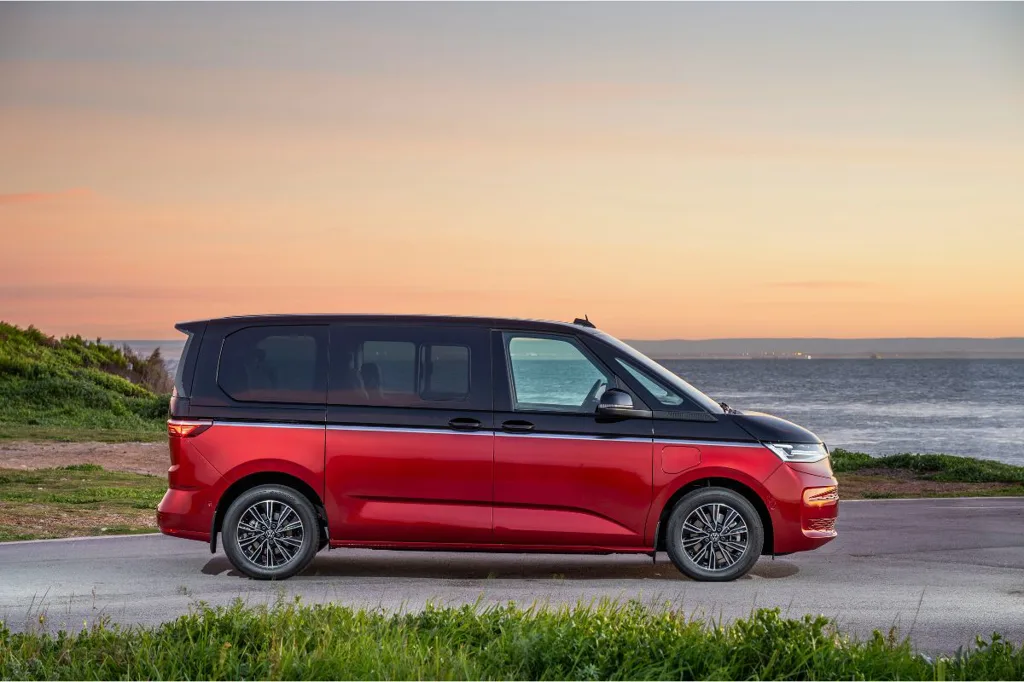 We do have to wonder about the 7 occupants luggage though.
4MOTION is clever. But where are we going?
The Caravelle's electrically driven rear axle is probably one of its most interesting technical features. Unlike a conventional mechanically connected AWD system, the rear axle is driven electrically, allowing the system to distribute torque independently according to traction and driving conditions. That can be genuinely useful on wet roads, loose surfaces and slippery terrain.
But let's not get carried away. 4MOTION gives the Caravelle traction. It doesn't give it more ground clearance. This remains a large, relatively low slung people carrier with a long wheelbase. It isn't suddenly a rival to an SUV because Volkswagen has put an electric motor at the back. For a family heading to a gravel road holiday destination, that distinction matters.
The electricity isn't free either
The 19.7 kWh battery can be charged at home, at work or using public charging infrastructure. Volkswagen supplies a 7.4 kW AC wallbox and quotes around 5.5 hours for charging, while the vehicle supports 11 kW AC charging and 40 kW DC charging, with 10 to 80% DC charging possible in approximately 26 minutes under optimal conditions. For someone who charges at home and has top of the range solar and drives mostly short distances, this could be the sweet spot of the entire package.
But there is another question. What does charging the Caravelle every night actually add to your electricity bill? That's not something Volkswagen's press release answers. Neither does it tell us precisely how much money the average owner will save compared with simply filling a fossil fuel powered Caravelle. Those calculations depend on electricity tariffs, charging losses, fuel prices, driving patterns and how often the petrol engine is required.
So yes, electric driving can be cheaper. But “electric” doesn't automatically mean “free”.
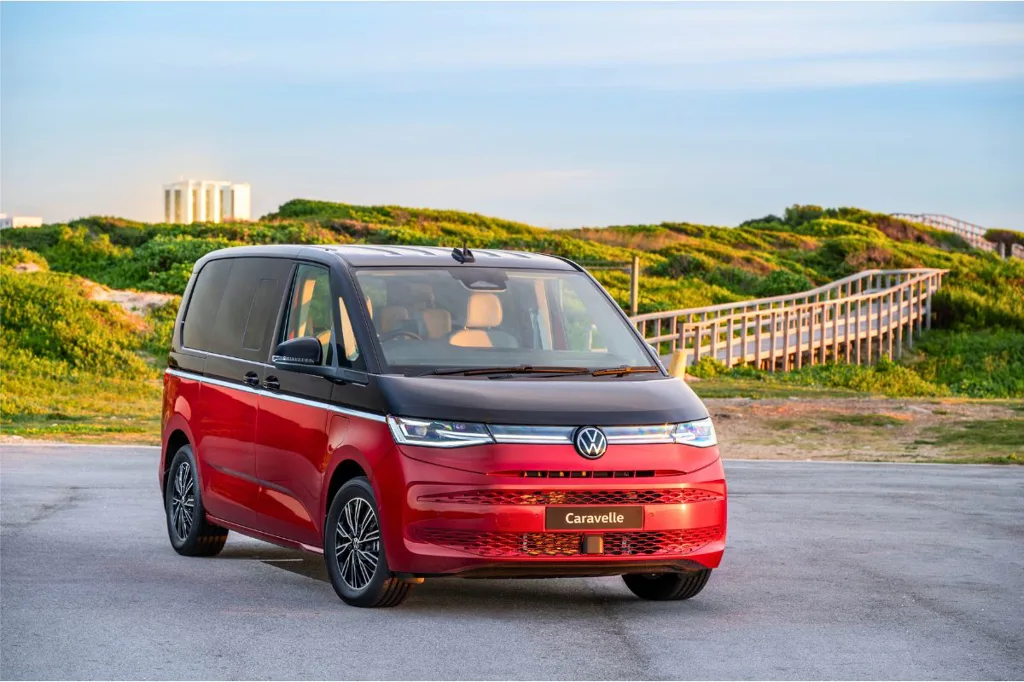 Sleek, elegant modern styling.
 Sponsored
Advertise with Motor IQ today!
Some cars aren't just transport, they're a passion. Connect with enthusiasts who appreciate the curves, the tech, and the drive.
Learn More.
And then there's the 1.5 litre question
Here's another thing we'd like to know.
The Caravelle is a substantial vehicle, and Volkswagen has chosen a relatively small 1.5-litre turbocharged petrol engine as the combustion component of this sophisticated hybrid system. Modern turbocharged engines can be extremely capable, so there is no reason to assume this engine won't do the job.
But we're not going to pretend we know what this particular powertrain will look like at 150,000 or 200,000 km because the vehicle is new. It combines a turbocharged petrol engine, electric motors, high-voltage battery, power electronics, DSG transmission and electric AWD. That's a lot of technology. The warranty gives buyers some protection, but long term durability is something only time and kilometres can prove. That's not criticism. It's simply a question that hasn't had time to be answered yet.
The Caravelle still knows what it's supposed to do
For all the questions, there is plenty here that makes sense.
Seven seat practicality remains central to the Caravelle, while standard equipment includes three zone climate control, a 13 speaker 840 watt Harman Kardon sound system, electrically operated sliding doors, powered tailgate, Keyless entry and start, adaptive cruise control, IQ.LIGHT LED Matrix headlights, Park Assist, rear camera, blind spot monitoring and Rear Traffic Alert.
So this isn't a stripped-out science experiment wearing a Volkswagen badge. It's a properly equipped premium people carrier. The problem isn't what the Caravelle eHybrid is. The problem is what it costs to be one.
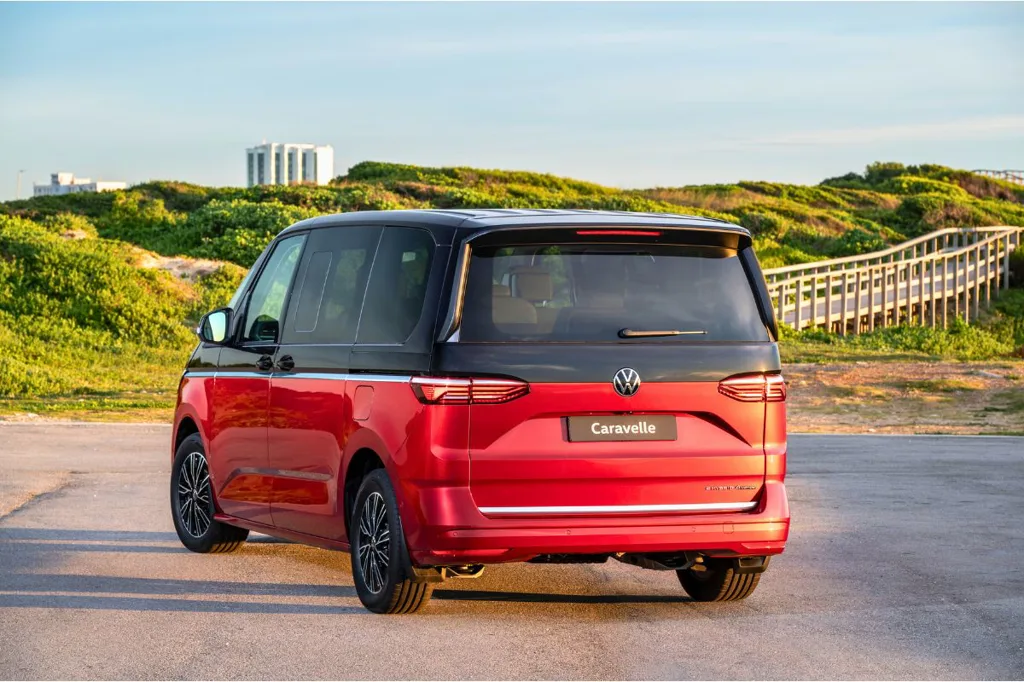 Electrically operated sliding doors, powered tailgate.
So, who should buy one?
If you can charge at home, spend most of your time doing relatively short daily journeys and occasionally need to cross the country without wanting to plan your life around charging stations, the plug in hybrid formula makes a lot of sense.
That's probably the strongest argument for this vehicle in South Africa. But if you're looking for a practical family bus, the price makes the Caravelle eHybrid a very different proposition. At R1,794 million, you're buying premium technology and considerable convenience, but you're also paying a very substantial premium to get it.
And that brings us back to the question Volkswagen needs to answer: Is the Caravelle eHybrid the cleverest Kombi yet, or is it simply the most expensive one? The answer is yet to be determined.
Volkswagen Caravelle eHybrid 4MOTION - R1,794,000.
And we'd rather Volkswagen tells South African buyers exactly where the compromises are than try to convince us there aren't any, and let the buyer male an informed decision.
Specification
|
Caravelle eHybrid 4MOTION
|
|
Engine
|
1.5-litre TSI evo2 turbocharged petrol
|
|
Petrol engine power
|
130 kW
|
|
Petrol engine torque
|
250 Nm
|
|
Combined system power
|
180 kW
|
|
Combined system torque
|
350 Nm
|
|
Transmission
|
6-speed DSG
|
|
Hybrid system
|
Plug-in Hybrid Electric Vehicle (PHEV)
|
|
High-voltage battery
|
19.7 kWh lithium-ion
|
|
Electric-only range
|
Up to 95 km*
|
|
Combined driving range
|
Up to 700 km*
|
|
All-wheel drive
|
4MOTION with electrically driven rear axle
|
|
AC charging
|
Up to 11 kW
|
|
DC charging
|
Up to 40 kW
|
|
DC 10 - 80% charging
|
Approximately 26 minutes*
|
|
Home wallbox
|
7.4 kW supplied
|
|
Home charging time
|
Approximately 5.5 hours*
|
|
Seating
|
7
|
|
Climate control
|
Three-zone Air Care Climatronic
|
|
Sound system
|
Harman Kardon, 13 speakers, 840 W, subwoofer
|
|
Headlights
|
IQ.LIGHT LED Matrix
|
|
Driver assistance
|
ACC, Side Assist, Blind Spot Monitoring, Rear Traffic Alert, Exit Warning
|
|
Parking assistance
|
Park Assist, front & rear Park Distance Control, rear-view camera
|
|
Wheels
|
17-inch Dundrod alloy wheels
|
|
Sliding doors
|
Electric left and right, Easy Open/Easy Close
|
|
Tailgate
|
Power operated
|
|
Warranty
|
3 years / 120,000 km
|
|
Maintenance plan
|
5 years / 100,000 km Easy Drive
|
|
Anti-corrosion warranty
|
12 years
|
|
Battery warranty
|
8 years / 160,000 km
|
|
Service interval
|
15,000 km
|
|
South African price
|
R1,794,000 incl. VAT & emissions tax
|
*Manufacturer-quoted maximum/approximate figures. Real-world range, charging time and energy consumption will vary according to conditions, driving style, load, temperature and charging installation.

Words and Photographs by:
Motor IQ Staff Writer
Behind every sharp story, clean gallery and late night news drop on Motor IQ, there’s a quiet creative force keeping the wheels turning. Read more →